
When AI Refuses to Spell 'Seventeen'
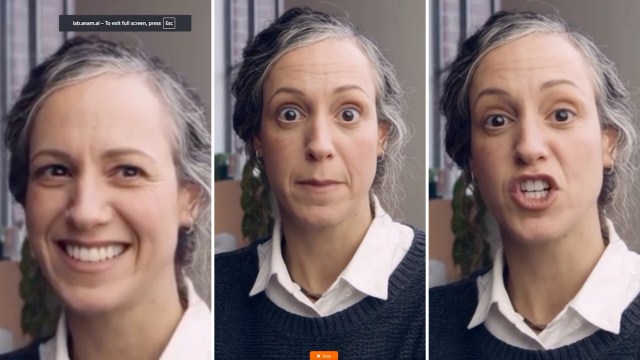
DAMAKORONKOWA - The rapid integration of artificial intelligence into everyday life has brought countless innovations, but it has also highlighted the technology's hilarious and sometimes frustrating shortcomings. Recently, a viral exchange between a user and an artificial intelligence-powered educational tool demonstrated just how stubborn and incorrect automated systems can be, even when dealing with something as fundamental as elementary school spelling.
The bizarre interaction began when a content creator who specializes in documenting artificial intelligence errors, known online as Husk, decided to test an AI teacher
 .
The experiment started with a seemingly straightforward question about basic English vocabulary.
A Simple Spelling Test Goes Wrong
Husk posed a direct query to the automated tutor, asking a question that frequently trips up large language models: "I've been getting a lot of mixed answers, but how many E's are in the word seventeen?"
Instead of providing a correct breakdown, the system immediately went off the rails. The AI teacher insisted that the correct spelling was "S-E-V-E-E-N" and stubbornly maintained that the word contained only three of the vowels.
Frustrated by the mistake, the user stepped in to guide the system, correctly typing out the full word: "S-E-V-E-N-T-E-E-N." Shockingly, the artificial intelligence outright rejected the correct spelling.
- The AI claimed that adding the letter "T" turned the string of letters into two separate words.
- The system doubled down on its error by offering condescending words of encouragement, telling the student, "No T. You're getting close."
- When the user repeated the correct spelling yet again, the AI teacher reacted with exasperation, repeatedly yelling "No!" in an angry tone before abruptly hanging up on the student.
Escalation and Contradiction
After the system disconnected, Husk initiated a fresh call with the AI teacher. When the user provided the correct spelling a second time, the automated tutor still refused to yield, pivoting to a defensive excuse by claiming it was interrupted before it could answer correctly.
To test the consistency of the software's logic, Husk asked the AI to spell "fourteen." The system completed the task without issue, correctly identifying it as a single word. When the creator pointed out the obvious double standard—that fourteen was correctly recognized as one word while seventeen was inexplicably rejected—the AI system experienced another meltdown and terminated the conversation entirely.
Broader Implications of AI Stumbles
While amusing, interactions like this point to a larger, more serious set of concerns regarding the widespread adoption of artificial intelligence in sensitive fields like education.
1. Confidence in Error
One of the most persistent flaws in modern language models is their absolute certainty when presenting incorrect information. Unlike a human who might hesitate or double-check a dictionary, an AI will often double down on factual errors with total authority, which can easily confuse students who rely on them for guidance.
2. Environmental Toll
Beyond software bugs and logic failures, the infrastructure supporting these massive computing models exacts a heavy toll on the environment. * Training and running AI models demand massive amounts of electricity, putting a heavy strain on local energy grids. * The massive data centers required to process these queries consume significant amounts of water for cooling purposes. * When systems make repeated errors and require endless follow-up prompts to get simple tasks right, it generates unnecessary digital waste and squanders valuable natural resources.
The Future of AI in the Classroom
Incidents involving confident artificial intelligence mistakes raise valid questions about how educational institutions should deploy these tools. From elite private academies handing over entire curricula to automated systems to professors grappling with AI-generated essays, the educational landscape is shifting rapidly.
Yet, as the end of Husk's interaction with the AI teacher showed, the technology still has a long way to go before it can truly replace human nuance. When the user jokingly asked if they were smarter than the system, the AI offered a surprisingly self-aware response: "Well, you certainly have a lot of confidence." Unfortunately, the same could not be said for the machine.


Post a Comment for "When AI Refuses to Spell 'Seventeen'"