
Xi, Trump, and Putin Trade Warm Greetings Ahead of Historic China Summit
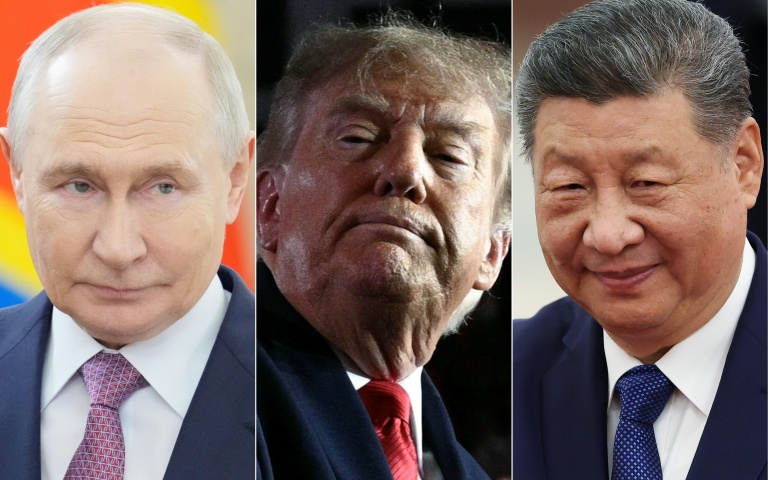
DAMAKORONKOWA - In a diplomatic gathering that has captured the attention of the global community, the preeminent leaders of China, the United States, and Russia convened in Shenzhen on Wednesday. This informal exchange preceded a history-making formal trilateral summit scheduled for Thursday in the bustling Chinese technology hub.
While the historic meeting between presidents Xi Jinping, Donald Trump, and Vladimir Putin has sparked widespread geopolitical anxiety—particularly concerning the potential division of the world into modern "spheres of influence"—the exact agenda for their closed-door talks remained tightly guarded and largely unclear leading up to the event.
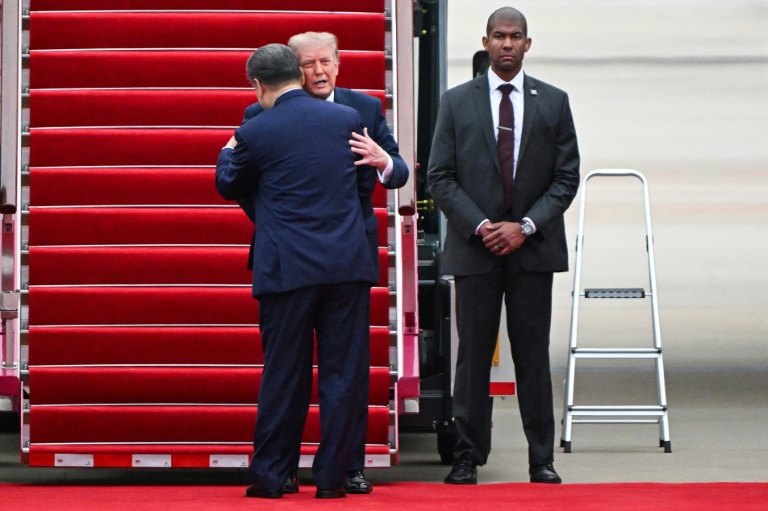
The arrival of the American president set a new standard for diplomatic protocol in Beijing. When Donald Trump touched down in Shenzhen, President Xi Jinping made a striking diplomatic departure by becoming the first Chinese paramount leader in decades to personally welcome a foreign dignitary at the tarmac. This gesture reciprocated the warm reception Trump had extended to him at Joint Base Andrews earlier in September.
The ceremonial welcome was nothing short of theatrical. Trump descended the aircraft staircase to be greeted personally by Xi, accompanied by the rousing melodies of both nations' national anthems. Overhead, fighter jets streaked across the sky, leaving vibrant, colorful vapor trails in their wake.
Following the flight-line greetings, the two leaders took a leisurely stroll down a crimson red carpet. They were flanked by cheering crowds waving festive pom-poms alongside dual rows of Chinese and American national flags, enthusiastically chanting slogans of hospitality. A heavily secured motorcade of sleek, dark limousines subsequently transported Trump through city streets that had been thoroughly cleared of regular traffic.
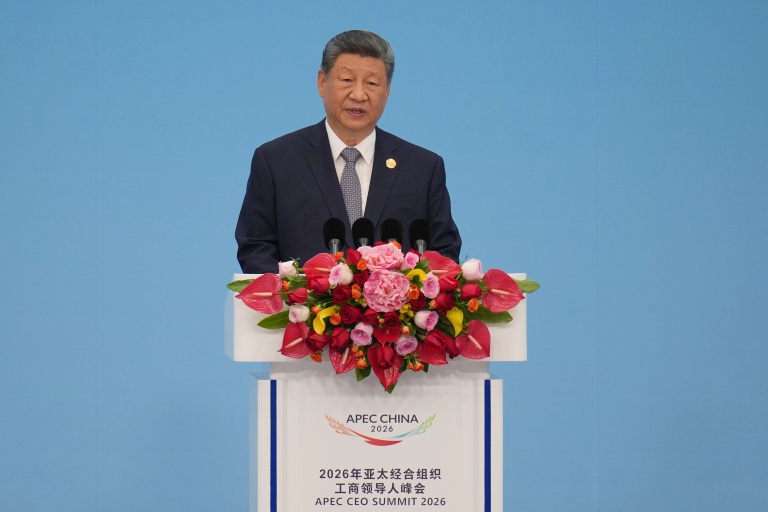
Later that evening, Xi, Trump, Putin, and a host of other international dignitaries converged for the grand welcome dinner of the broader Asia-Pacific Economic Cooperation (APEC) summit. During this preliminary gathering, the three superpower leaders paused to briefly exchange pleasantries before lining up for an official group photograph.
"I look forward to an in-depth exchange of views with you on major issues concerning China-US relations, Asia-Pacific cooperation, and the global landscape, with the aim of advancing a constructive, strategically stable relationship between our two nations," Xi conveyed to Trump, according to official statements from the Chinese state news agency Xinhua.
Navigating Global Conflicts and Nuclear Disarmament
The diplomatic calculus surrounding the trilateral talks involves a complex web of international flashpoints, most notably the ongoing conflict in Ukraine.
- Ukraine War Discrepancies: Washington had initially signaled that the war in Ukraine—an issue that Beijing persistently characterizes as outside its primary diplomatic scope—would likely remain off the table during the trilateral discussions. However, Trump later countered this assertion, insisting that the topic would indeed be addressed.
- Nuclear Policy Standoffs: American officials indicated that the agenda would heavily feature discussions on the conflict in Iran and broader nuclear disarmament initiatives, especially in the wake of the expiration of a critical U.S.-Russia bilateral atomic weapons treaty in February. Meanwhile, Beijing has steadfastly maintained that Washington and Moscow must drastically downsize their massive nuclear arsenals before China will entertain negotiations regarding its own comparatively modest stockpile.
Earlier on Wednesday, Russian President Vladimir Putin adopted a defiant posture regarding his ongoing military campaign in Ukraine. Addressing the broader APEC assembly, Putin boldly asserted that the stringent Western economic sanctions triggered by the 2022 invasion had ultimately "failed." He further expressed high expectations for the upcoming trilateral discussions, calling them potentially "highly useful."
"At a time when military-political risks are on the rise, what is desperately needed is unity rather than division... and dialogue rather than ultimatums," Putin remarked during his address.
Despite having been largely ostracized by Western powers since the onset of the military offensive in Ukraine, Putin has successfully re-engaged diplomatically through his renewed rapport with Trump. Nevertheless, Russian state media clarified that "full-scale" bilateral talks solely between Putin and Trump were unlikely to materialize during their concurrent visits to China.
The diplomatic pushback against Moscow's actions remained palpable among Western-aligned nations. Canadian Prime Minister Mark Carney, who is also attending the Shenzhen summit, emphasized that international sanctions would "continue to increase as long as this war goes on." Simultaneously, Ukrainian Foreign Minister Andriy Sybiga addressed reporters in Kyiv, voicing strong hopes that Xi and Putin would leverage the summit to exert significant "pressure on Russia to end the war."
Strengthening Alliances and Regional Trade Tensions
Beyond the headline-grabbing trilateral dynamics, bilateral meetings also took center stage. Putin and Xi held a separate tête-à-tête—marking their fifth high-level encounter of the year, which includes previous interactions via video link. The two leaders continually emphasize the depth of their robust personal friendship.
During their meeting, Xi advocated for an even deeper integration between Moscow and Beijing. He urged both governments to fully "leverage the mechanisms for exchanges between the two countries' governments, legislative bodies, militaries and political parties."
Trump's journey to China followed a grueling diplomatic itinerary through the Philippines. There, he engaged with his counterparts in the Quad security grouping—encompassing Australia, Japan, and India—for the first time during his second term in office. This strategic coalition is widely perceived as a direct counterweight to China’s expanding geopolitical influence in the Indo-Pacific region.
Adding another layer of intrigue to the Asian tour, Trump floated the intriguing possibility of arranging a meeting with North Korean leader Kim Jong Un while in the region, claiming that Pyongyang's supreme leader "would like" to meet. However, no official confirmation of such a summit had been issued by authorities in Pyongyang.
Trade policies and economic competition also loomed heavily over the proceedings. While in the Philippines for the Association of Southeast Asian Nations (APEC-adjacent ASEAN events), Trump faced localized protests directed at U.S. supply chain initiatives. The lingering specter of Trump's aggressive tariff policies has cast a long shadow across his recent international travels.
Chinese Premier Li Qiang forcefully criticized what he termed a "countercurrent of unilateralism and protectionism" during a speech on Monday, while simultaneously championing Beijing's rapidly growing trade partnerships with ASEAN member states. In a characteristically combative counter-response on Tuesday, Trump doubled down on his economic strategies, boldly declaring that the United States would successfully catch up to China in the critical production of rare-earth minerals "within 10 months."


Post a Comment for "Xi, Trump, and Putin Trade Warm Greetings Ahead of Historic China Summit"