
Taylor Swift’s Toy Story 5 Journey: How Writing for the Franchise Changed Her Life
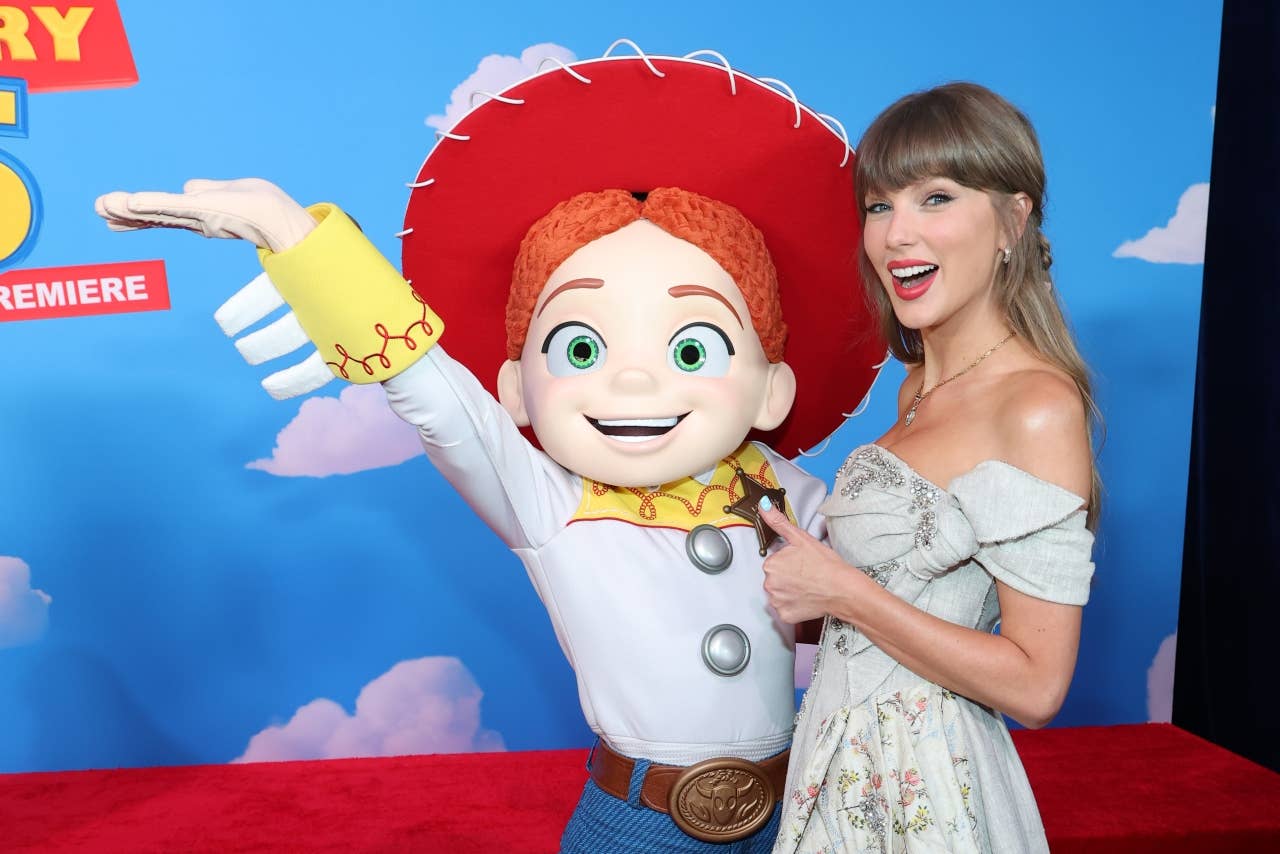
DAMAKORONKOWA - The world was first introduced to the magic of Pixar when Taylor Swift was just five years old, sitting down to watch the original Toy Story. During a virtual press conference for the Critics Choice Awards, the global superstar reflected on how that initial viewing experience completely rewired her imagination. Currently campaigning for a coveted Oscar nomination for her original track "I Knew It, I Kended You" from the upcoming Toy Story 5, Swift remembered the exact childhood epiphany she had upon seeing the film.
"Wait a second! What are my toys going through? I never thought about that before," Swift recalled thinking at the time. Her childish realization was simple yet profound: "That’s crazy. I should play a little nicer."
Over the years, that childhood wonder blossomed into a profound artistic appreciation. Swift admits that she now holds the entire cinematic franchise in deep "reverence." She expressed absolute awe at how the storytellers manage to weave intricate narratives into films primarily driven by plastic playthings.
- The masterclass in modern storytelling achieved by the franchise includes:
- Layering complex emotional revelations and life lessons seamlessly.
- Creating hilarious moments that genuinely make audiences laugh out loud.
- Designing characters so vibrant and distinct that they immediately remind viewers of specific friends in their own lives.
When the opportunity finally arose for Swift to contribute her own musical artistry to the universe, she did not hesitate. However, she knew she wanted a trusted partner by her side, ultimately bringing in longtime collaborator Jack Antonoff to co-write and co-produce the track.
Stepping Into the Shoes of Jessie
Set two years after the events of Toy Story 4, Toy Story 5 finds beloved characters like Jessie, Woody, and Buzz Lightyear navigating a drastically changed playroom environment. The central disruption comes in the form of Lilypad, a high-tech tablet that quickly becomes Bonnie's new favorite distraction.
Swift’s contribution, "I Knew It, I Knew You," serves as the official concluding musical piece of the film and was written specifically from the perspective of Jessie the cowgirl. According to the singer, achieving the necessary emotional maturity to authentically channel Jessie's internal journey took decades of personal growth.
"When I was watching this film, I was so struck by the lessons that Jessie learned," Swift explained. "I think that they resonated with me because they were lessons I’ve learned in my life, and maybe I wouldn’t have been able to write this song until I was in my 30s. It takes you a long time to process and perceive memory with acceptance, and that’s, I think, the most beautiful thing that Jessie learns in this film."
Honoring a Legacy and Working With Randy Newman
While crafting the song, Swift kept legendary composer and songwriter Randy Newman firmly at the front of her mind. Newman has defined the musical landscape of the entire franchise, most notably through his timeless anthem "You’ve Got a Friend in Me." Sharing a stage with Newman at the movie's premiere remains, without a doubt, the single greatest highlight of her experience working on the project.
"I just felt like I was in a dream sequence or something," Swift shared, describing the surreal nature of hearing those iconic opening notes played live right in front of her. "I never thought I’d ever get to hear that live. It’s just unreal. He’s so funny, he’s so quick-witted."
Newman apparently brought an extra layer of magic to the premiere by improvising jokes and spontaneous ad-libs that they had never practiced during the soundcheck. For Swift, getting embraced by someone she considers such a radiant, sparkly creative force was an unbelievable honor, and she expressed immense gratitude for his hospitality in welcoming her into the musical fold.
Healing Old Wounds Through Song
When discussing the rich history of Jessie's musical moments, the conversation inevitably turns to the devastatingly iconic song "When She Loved Me." For Swift, the track represents grief in its absolute purest form.
- The profound emotional weight of "When She Loved Me" includes:
- Eliciting an immediate, visceral reaction strong enough to bring the singer to tears without even needing to play the audio.
- Capturing pure sorrow, heartbreak, and grief stemming from Jessie's abandonment by her former owner, Emily.
- Juxtaposing Jessie's outward bravery, wild extroversion, and risk-taking nature with deep, hidden wells of historical sorrow.
This foundational grief has shaped Jessie and remained a shadow she carried for decades. With "I Knew It, I Knew You," Swift wanted to validate that pain. She noted that for Jessie's loss of Emily to matter so profoundly across the span of many years, it required validation. When Jessie ultimately realizes that her time with Emily still mattered—that making an impact on someone's life, even temporarily, is enough to hold true value—the character achieves a vital breakthrough.
As a lifelong fan of the cowgirl character, Swift wanted to offer a musical gift of closure. By lightly referencing the musical motifs of "When She Loved Me" and subsequently pivoting toward emotional resolution, the new track actively heals an old wound. What began as a character defined by a paralyzing fear of being forgotten has finally blossomed into someone who fully understands and embraces her own worth.
Throughout an extensive and celebrated career, a constant theme has been the ability to reinvent oneself while remaining deeply anchored to one's foundational roots. When reflecting on this personal evolution, striking parallels emerge when examining the journey of characters like Jessie, whose narrative arc resonates on a deeply personal level. Operating within the fast-paced entertainment industry often feels akin to attempting to hit a moving target. The moment audiences and critics believe they have completely figured out an artist's creative blueprint and predictable capabilities, they inevitably transition into a phase of dismissal or discardment.
Anticipating this natural cycle is precisely where strategic pivoting becomes essential. Whenever the expectation points toward a predictable direction, the deliberate choice must be to head in the opposite direction. Rather than viewing this constant reinvention as an exhausting or daunting burden, it is far more constructive to embrace it as an exciting, ongoing adventure. Completing one creative milestone naturally sparks the search for the next source of inspiration.
Jessie’s trajectory constantly mirrors this spirit of adventure. She is perpetually driven to assist new companions, guided by deep-seated inspiration, and always facing upcoming challenges with remarkable fearlessness. Yet, the emotional weight of the narrative hits a poignant peak during a moment of profound crisis within the film. Confronted with overwhelming feelings of hopelessness and uselessness, she questions her own worth, wondering aloud if she is a flawed toy and whether any of her contributions truly matter.
This heartbreaking vulnerability evokes an immediate protective response from the audience, rooting fiercely for her redemption. Without revealing any spoilers, the resolution she ultimately reaches serves as the direct emotional catalyst for the musical creation that followed.
Collaborating Within a Legacy
For generations, the sonic landscape of Toy Story has been inextricably linked to the legendary compositions of Randy Newman. Blending a distinct personal voice with such an established, iconic musical universe required a delicate and deliberate approach. Newman occupies a singular space in film history; his ability to construct a rich, instantly recognizable sonic world around these characters is the pinnacle of achievement. Transporting audiences straight back to the emotional core of their childhood memories upon hearing those familiar notes is pure mastery.
As a lifelong admirer of Newman's work, joining forces with co-writer Jack Antonoff was a natural first step. Antonoff shares the same profound respect and deep fandom for Newman's catalog, making him the ideal partner for a project of this magnitude.
- Honoring the legacy required stretching creative boundaries well beyond comfort zones.
- Exploring chord progressions that would typically be avoided on standard solo studio albums became a necessary exercise.
- A prime example appears in the line regarding life leaving days behind; while a typical composition might lean toward an A minor chord, this project utilized an A7 resolving into a D minor, creating a momentary illusion of modulation.
This granular attention to detail extended into the instrumental arrangements. Embracing Newman's style meant incorporating tenor and baritone saxophones playing with a loose, organic structure rather than rigid, overly organized parts. The instrumentation functioned almost like a jam band, with individual players embodying distinct characters. The saxophone hook weaves directly alongside the vocal chorus hook, resulting in artistic choices far removed from standard contemporary pop production.
Weaving Country Roots and Lyrical Allegory
Infusing the track with authentic country elements felt essential to properly honor Jessie’s cowgirl origins from Woody's Roundup. Integrating instruments like the banjo, mandolin, and harmonica brought a structural familiarity that naturally elevated her character's backstory. However, balancing those traditional elements with the intricate, cinematic style of Newman required total immersion in the project from the very first viewing.
Upon returning home after watching an early cut of the film, the immediate instinct was to sit straight at the piano, clear the schedule, and initiate an urgent FaceTime session with Antonoff to begin writing immediately.
When analyzing the creative genesis of the track, the lyrical concepts naturally took precedence during the initial writing phase. A deep appreciation for double meanings and layered storytelling always drives the lyricism, allowing lines to function on both literal and allegorical levels simultaneously.
- The opening line sets an immediate nostalgic tone about knowing someone through simpler times.
- The imagery evokes the carefree days of youth spent outdoors running barefoot through summer grass.
- These specific motifs capture a version of personal history that only a handful of lifelong companions truly witness.
By blending these evocative lyrical themes with a meticulous sonic tribute to cinematic history, the resulting composition bridges the gap between personal artistic evolution and a beloved animated legacy.
Beyond the literal interpretation, these characters are ultimately playthings. When they stand firmly on the ground and gaze upward at their human child, their perspective is framed through towering blades of grass because of their diminutive stature. The creative process heavily involved exploring these layers of double meaning, blending both figurative and literal lyricism seamlessly.
A major breakthrough came with the realization and reinforcement of a core theme: trusting one's initial instincts.
The Power of Intuition in Storytelling
The narrative touches deeply upon the emotional connection between Jessie and her kid. In Jessie's mind, she is actively nurturing, raising, and playing with this child on a daily basis. She views her role as vital in teaching the youngster how to unlock and explore the vast depths of imagination.
- Validation of Feelings: The realization that her efforts truly mattered brings a profound sense of vindication—the comforting thought of, "I knew it. I had it right originally."
- Trusting the Gut: Emphasizing the importance of intuition, the storyline reflects Jessie's internal journey where she believed deeply in the strength of their bond, whether viewed as a friendship, a mentorship, or a traditional caregiver-child dynamic.
- The Pain of Separation: When Emily eventually departs, it triggers a devastating wave of self-doubt within Jessie, leading her to question the very foundation of their relationship with the heartbreaking thought, "Did I not know you at all?"
From Concept to Melody
The creative workflow moved swiftly from conceptualizing the emotional weight of the scene to drafting the actual composition. While the lyrics generally took precedence in the initial brainstorming phase, the musical melody followed almost immediately afterward, as the collaborative team wasted no time in bringing the sonic landscape to life.
The progression from emotional beats to structured songwriting happened at a rapid pace, ensuring the raw feelings of heartbreak and attachment were accurately translated into the final piece. This meticulous attention to detail ultimately paved the way for exciting developments regarding the franchise's musical future, highlighted notably when Taylor Swift Reveals the One Condition She Set To Write the Closing Song for Toy Story 5.


Post a Comment for "Taylor Swift’s Toy Story 5 Journey: How Writing for the Franchise Changed Her Life"