
Oregon GOP Seeks 2028 Ballot Ban on Transgender Girls in School Sports
DAMAKORONKOWA - Oregon could soon become the latest battleground in the national debate over transgender rights and school athletics. A coalition of conservative state lawmakers is actively exploring a potential ballot measure that would restrict girls' school sports teams to athletes based strictly on their biological sex at birth, which would effectively ban transgender girls from competing in those categories.
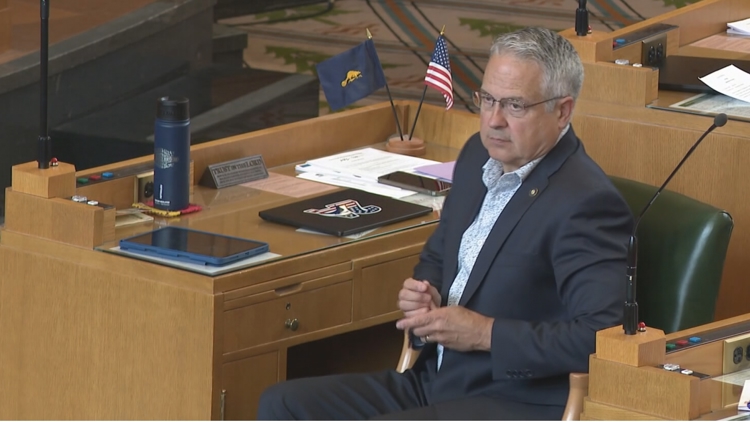
Republican state Rep. Ed Diehl, who is closely affiliated with the Oregon Freedom Coalition, revealed that the group is strongly weighing the initiative. While a final decision on whether to officially pursue the campaign has not yet been finalized, Diehl and other organizers are evaluating their options following the upcoming legislative session in January. If the coalition decides to move forward, supporters would immediately begin the arduous process of drafting the initiative and gathering the necessary public signatures to place the question directly in front of voters.
The Push for Voter Approval
Proponents of the potential measure are drawing inspiration and strategic momentum from neighboring states. Diehl pointed to recent political developments in Washington and Colorado—both of which generally lean Democratic—where similar voter-approved measures have found surprising traction. Organizers believe that the topic transcends traditional political party lines, framing the restriction as a fundamental issue of fairness and common sense rather than partisan politics.
- Advocates argue that maintaining sex-segregated sports categories protects the integrity of female competition.
- Proponents reference historic protections like Title IX, suggesting that female athletes deserve guaranteed safe spaces and fair competitive environments.
- Supporters estimate that a vast majority of Oregon residents would ultimately back a policy limiting female sports teams to biological females.
"On this issue I heard from so many young woman that feel violated. They expect through Title IX, they will have safe spaces," Diehl explained, emphasizing that he believes the policy does not constitute discrimination, but rather preserves organized competition based on biological sex criteria.
Opposition and Advocacy Efforts
On the other side of the aisle, LGBTQ+ advocates are deeply alarmed by the prospect of the ballot measure and are already organizing resistance strategies. Leadership at prominent advocacy groups, such as Basic Rights Oregon, view the proposal as a devastating step backward for civil rights and community inclusion within the state.
- Public Education Campaigns: Opponents are planning widespread outreach initiatives to humanize transgender youth and combat misinformation.
- Challenging the Premise: Advocates argue that targeting such a minute fraction of the student population is deeply misguided and serves primarily as a political distraction.
- Community Engagement: Leaders stress the importance of personal connections, noting that opposition is often rooted in a lack of familiarity with transgender individuals.
Kyndall Mason, the executive director of Basic Rights Oregon, expressed her profound disappointment regarding the potential ballot measure. She pointed out that out of nearly 100,000 high school athletes currently participating in sports across Oregon, only a tiny handful are transgender. To her and other critics, leveraging state legislation against such a small demographic is viewed as harmful and punitive.
Diehl, however, dismissed the argument that the small population size should exempt the issue from legislative or voter attention, maintaining that fundamental principles of fairness supersede the exact head count of affected students.
Expanding National and Regional Context
The brewing political fight in Oregon unfolds against a backdrop of intensifying scrutiny nationwide regarding transgender athletes in educational settings. Federal authorities have recently turned their attention to the Pacific Northwest, launching an active investigation into Camas High School in Southwest Washington. That federal probe centers on whether district policies permitting transgender student-athletes to compete on girls' teams—as well as share locker and hotel accommodations—violate federal civil rights regulations.
Such controversies have also sparked local protests and counter-protests, drawing the involvement of regional political leaders and drawing intense media attention to how schools manage inclusion, privacy, and competitive fairness.
The Path to the Ballot Box
For now, the initiative remains in its conceptual infancy. If the Oregon Freedom Coalition chooses to proceed following the January legislative session, they face a multi-step administrative and political marathon:
- Drafting the precise language of the proposed initiative for state review.
- Collecting an initial batch of at least 1,000 valid signatures to initiate the official state ballot title process.
- Launching a massive volunteer and paid signature-gathering campaign to secure tens of thousands of endorsements from registered voters. Depending on whether the coalition aims to alter existing state statutes or pursue a full amendment to the Oregon Constitution, supporters will ultimately need to amass somewhere between 92,000 and 123,000 certified signatures.
Should the campaign successfully clear these hurdles, Oregonians could find themselves casting a momentous vote on the issue during the November 2028 election cycle. Regardless of whether the measure officially materializes, both political camps are already bracing for a prolonged, high-stakes public debate over identity, fairness, and the future of youth sports in the state.


Post a Comment for "Oregon GOP Seeks 2028 Ballot Ban on Transgender Girls in School Sports"