
A daughter saw mom's memory fading. How AI helped preserve her stories
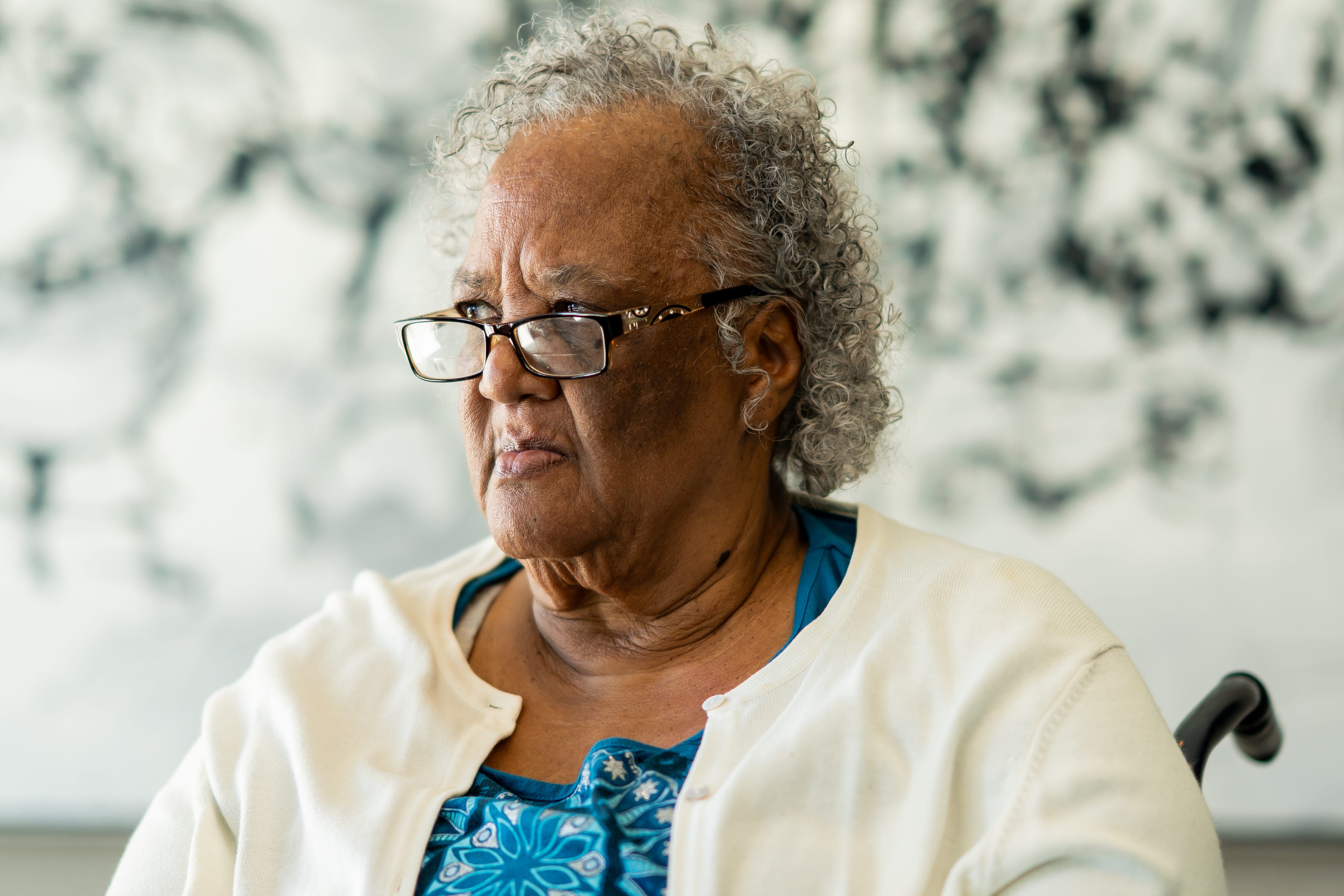
At age 77, lifelong Akron resident Theresa Singleton has lived a long and fulfilling life — one that she keeps quietly stored away in her memories and in the stories she tells.
She was separated from her four siblings at age 9 when her mother passed away and, from then on, was raised by her grandmother, Ruth Meminger, on Kipling Street.
While raising her own two daughters, Theresa was a single mother with a limited education, living on government assistance and often taking cleaning jobs to support her family.
When she started exhibiting signs of memory loss, her daughter Stephanie Singleton, 54, of Akron decided to take action to preserve Theresa’s stories of resilience, joy and hardship.
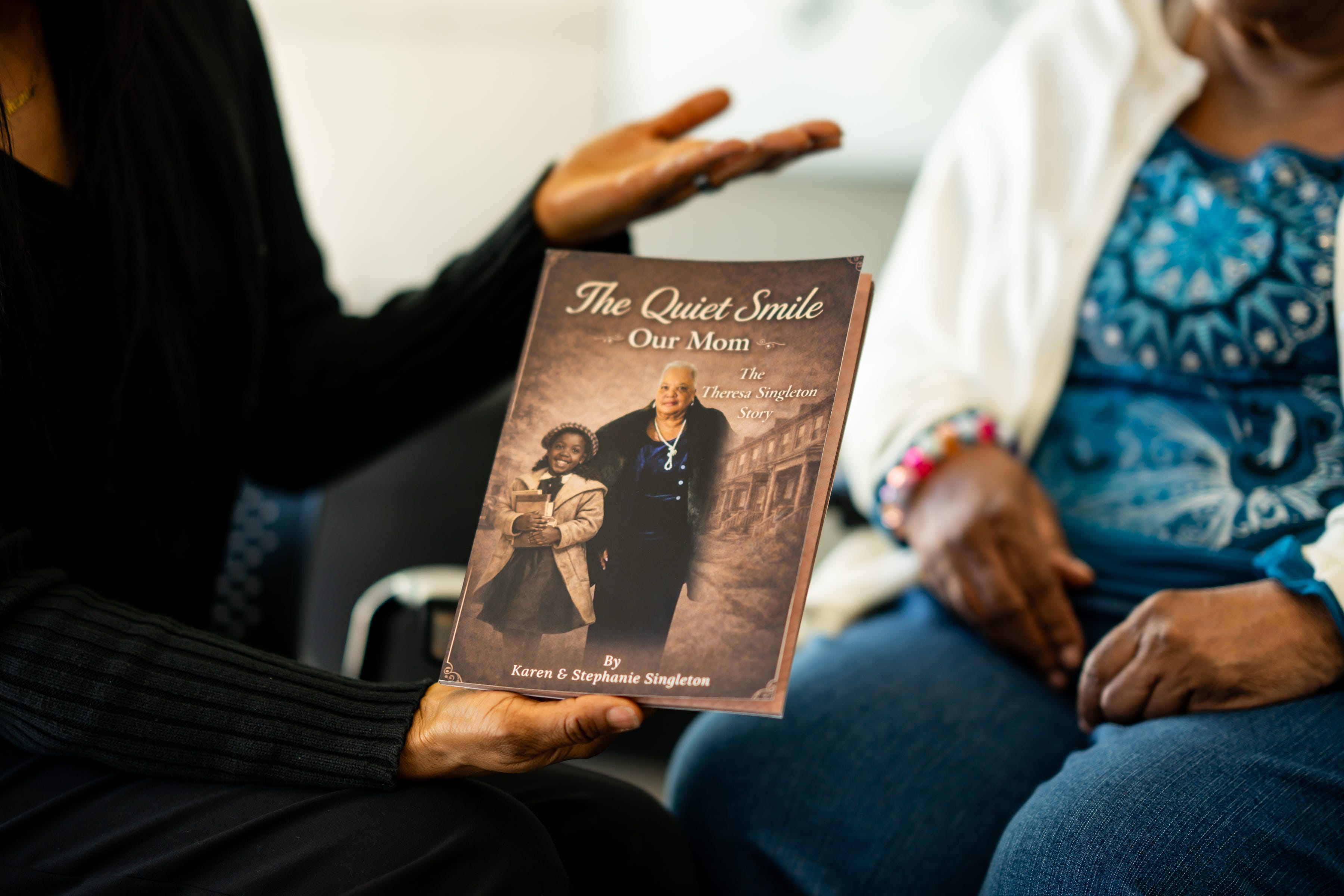
Using ChatGPT, Stephanie created a fully AI-generated illustrated book about her mother’s life, inspired by real photos. Over the course of two weeks, she searched through old photo albums, read obituaries and marriage documents and asked her mother questions about her life.
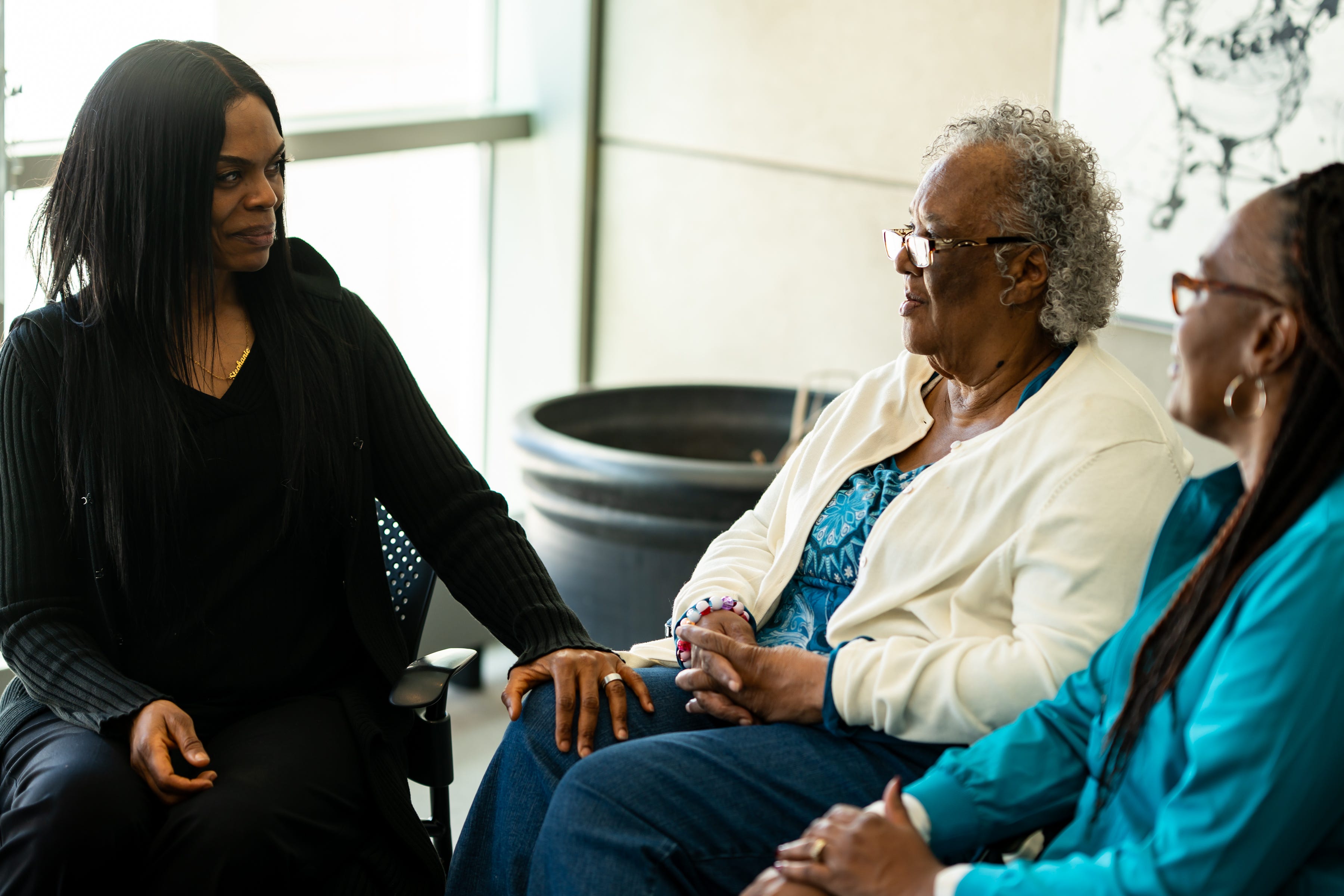
“It was a way that connected us, and we were capturing moments, too, and memories that we didn’t know anything about and allowing her to take herself in that place,” said Stephanie, who works as a wedding officiant.
She was able to piece together the most important memories of her mother’s life, beginning in 1948 when she was born and ending in the present day with her two daughters, three grandsons and six great-grandchildren.
The book, called “The Quiet Smile: Our Mom, The Theresa Singleton Story," is now one of Theresa’s most prized possessions — she keeps the book in her walker and shows it off to all her friends. She said when she saw it for the first time, she was surprised and happy.
Tearing up, Stephanie said, “She’s always been quiet — you get looked over and then feel less important.”
She said this book has not only given her mother the chance to finally have her story shine in a positive light, but the technology has given them ‒ and anybody else who tries it ‒ the chance to have conversations they may not have otherwise had.
How the book was created
Stephanie said she used a continuous conversation with ChatGPT to give it reference photos, ideas and stories she got from her mother.
Using these, AI was able to generate images of memories from Theresa’s life. The first page shows Theresa as a baby in a bassinet and her mother and father, with his signature piece of gray hair, looking over her.
Stephanie recalls that when Theresa saw the photo, she commented, "For the first time, I saw my mom."
This is when Stephanie thought, “We’re on to something.”
She continued to feed the chat stories and small references to include in photos that her mother would recognize, such as the family’s signature cookie jar, Grandma Meminger’s cat-eye glasses, the name of her elementary school, Glover, and her dog growing up, Mr. Tony.
To get her mother's facial structure just right, Stephanie had a childhood photo she supplied.
Sometimes, Stephanie said she would argue with ChatGPT, but, “At the end, me and AI, we give each other a high five.”
The role of reminiscence in caregiving
Losing one’s memory can be confusing, stressful and anxiety-inducing, said Susan Wallace, president and CEO of LeadingAge Ohio. The organization represents almost 400 aging service operators in Ohio.
“Oftentimes, when folks are losing their memory or cognition, they’ll gravitate toward what’s familiar,” Wallace said. “Those are things like their oldest memories that are the most rehearsed in our minds.”
For someone who is losing their memory, connecting back to familiar pieces of their life through reminiscence can be helpful.
“You create an experience where they can go where it is familiar, where it is safe, where these are known people that have associated feelings of safety and security, and you can dramatically reduce the stress and apprehension that individuals are experiencing,” Wallace said.
To ensure someone you are a caregiver for benefits from the reminiscence, she suggested watching how they respond to things like manufactured photos. If they become confused or frustrated, don’t force it.
“You’re going to be guided by the benefit that it provides to the individual,” she said. “It’s just really important to be thoughtful.”
Role of technology in caregiving
Supporting family caregivers is very important, said Abigail Morgan, president and CEO of Direction Home Akron Canton, the Area Agency on Aging. Technology can be a useful tool.
“There’s a lot of examples of people who, for the first time through technology, have access to be able to review photos kind of en masse,” Morgan said.
She has seen people being able to look at pictures and share memories they haven’t been able to go back to for a long time.
Lisbeth Sanders, founder and CEO of LifeBio, recognized the need to collect memories this way and created an easy way to do it in 2021.
Her app provides categories of questions caregivers can ask their older family members and a built-in recording tool to capture their voices.
Some of the approximately 200 questions cover childhood, family, school, work, advice, beliefs, accomplishments and legacy.
There are also places to record their detailed care information, such as foods they like to eat, things they like to talk about and what they like to do.
LifeBio takes the information collected and uses AI to turn it into a one-page snapshot and action plan to be used in caregiving.
Sanders said this not only drives person-centered care, but it also gives family members a tool to have their loved one’s voice forever.
“Just to have their loved one’s voice, real voice, real life stories, that’s what LifeBio is trying to do here,” she said. “I want to encourage people to think about real voices and real stories and to start early and often.”
A way to say ‘thank you’
As Theresa’s life progresses in her book and her daughters are born, Stephanie said it becomes a reflection of her and her sister’s lives as well.
Karen Singleton, 56, Theresa’s other daughter, said the book took her back when she held it for the first time.
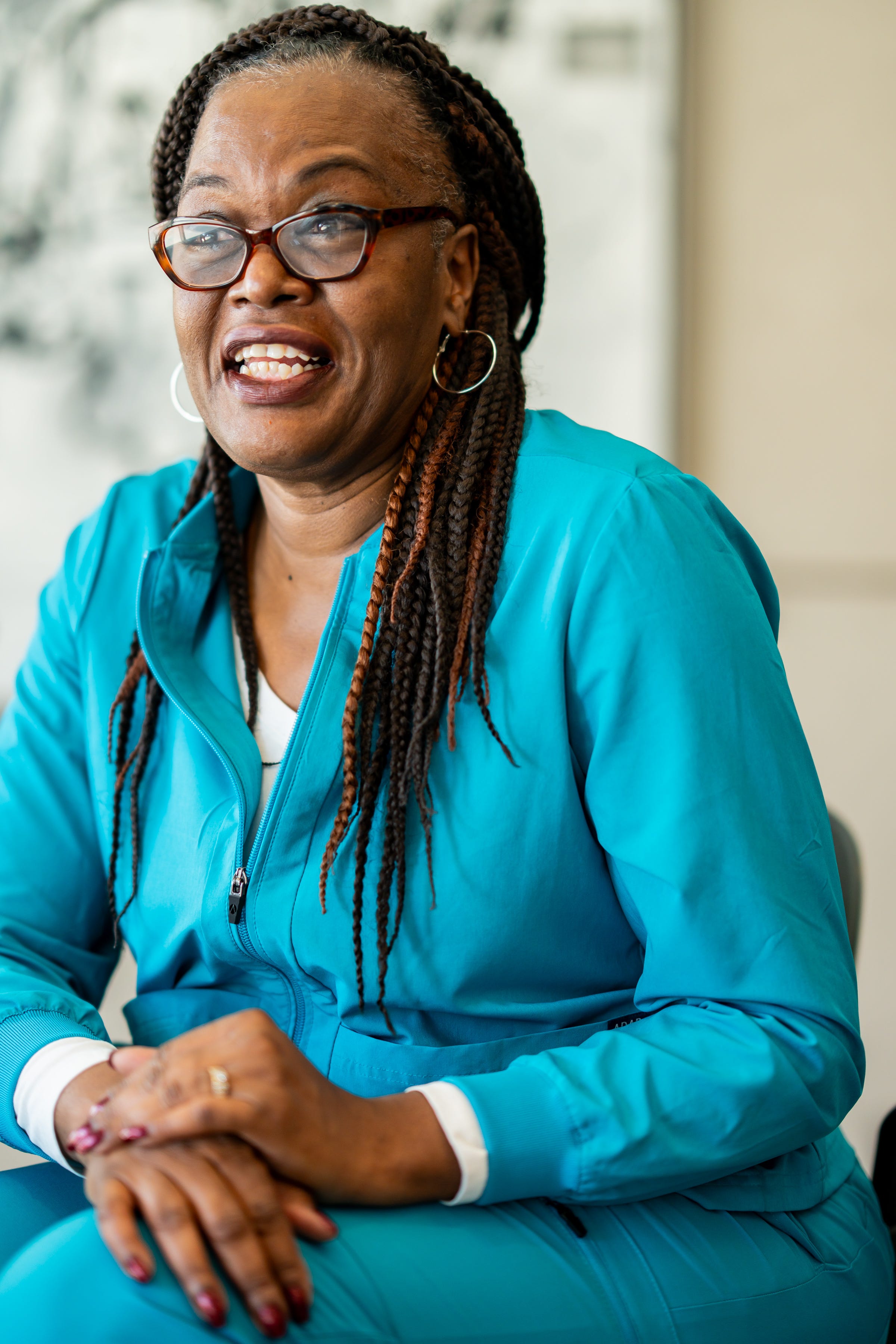
“We grew up to be strong, and there’s not hardly anything that we’ll sit here and say, ‘Oh, I can’t do that,’” said Karen, who is a nurse. “We’re going to make it happen. [Our mother] instilled that in us.”
There are photos of the daughters beginning to work around 15 years old, Theresa sitting at the kitchen table with overdue bills and the daughters’ graduations — a time when Theresa was able to see the reason for her sacrifices realized, Stephanie said.
“She would say she didn’t feel like she was credible for any of the things that we’ve done,” Stephanie said.
But that couldn’t be further from the truth.
Stephanie said when she held the book for the first time and looked through the pages, she realized she was able to truly show her mother everything she did for them. It was also written during February, Black History Month, which added an extra layer of importance to telling her story.
“Look what you did," Stephanie told her mom. "Each of these pages were built around you and what built us to who we are.”
Lauren Cohen is a community reporting intern for the Akron Beacon Journal and Signal Akron. The position is funded through a grant from the Knight Foundation.
This article originally appeared on Akron Beacon Journal: A daughter saw Mom's memory fading. How AI helped preserve her stories



Post a Comment for "A daughter saw mom's memory fading. How AI helped preserve her stories"