
Trump keeps asking Americans to sacrifice — for things they don’t want
As winter turns to spring in 2026, American politics is experiencing a bit of economic-messaging déjà vu from the Trump administration.
Much like last year at this time, the president has leapt headlong into a major new undertaking that threatens to rock an already-wobbly economy. And much like last year, the administration is asking Americans to accept some “short-term pain” for promised long-term gain.
In 2025, it was tariffs. In 2026, it’s the war with Iran.
It might be an even harder sell this time, though, at least in some part because of what happened with the tariffs. The administration’s assurances that the tariff pain would eventually bring back manufacturing jobs and leave the US economy humming didn’t exactly pan out, and then the US Supreme Court ruled a large portion of Trump’s sweeping effort was illegal.
The return of the “short-term pain” talking point
“Short-term pain” has clearly returned as an administration talking point in recent days.
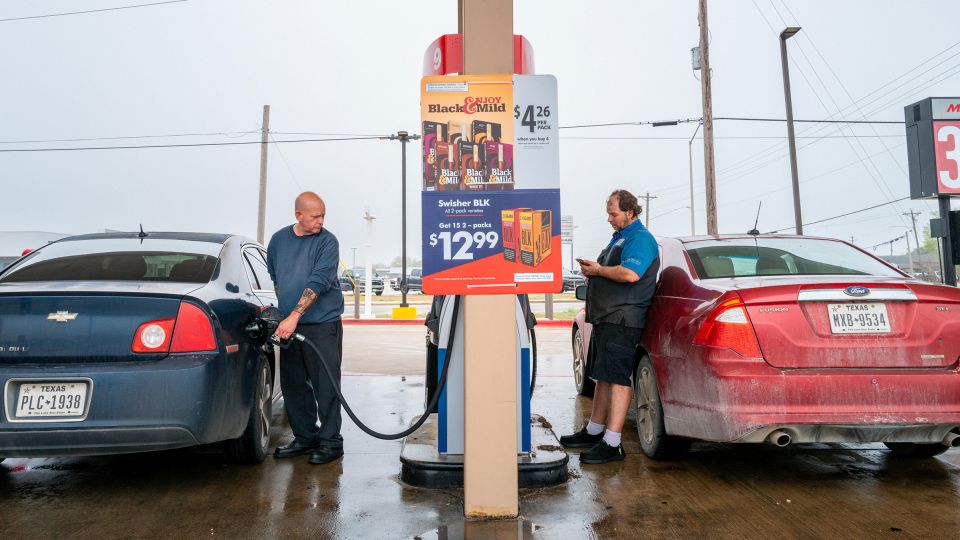
White House press secretary Karoline Leavitt called the spike in gas prices “temporary,” adding that taking out the rogue Iranian regime would “result in lower gas prices in the long-term.”
Energy Secretary Chris Wright told DAMAKORONKOWA that “you’ve got to go through short-term pain to solve a long-term problem.”
United Nations Ambassador Michael Waltz pitched it as “a bit of short-term pain for the long-term gain of Iran no longer being able to hold the world’s energy supplies hostage.”
And Trump has offered perhaps the most unvarnished versions of this talking point.
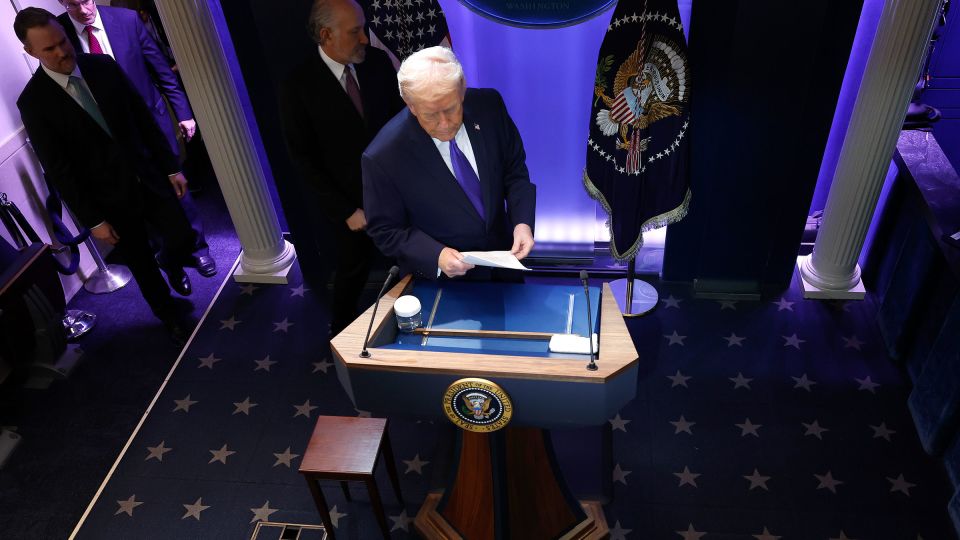
On Thursday, he posted on social media that preventing Iran from getting nuclear weapons was “of far greater interest and importance to me” than rising oil prices.
He also posted Sunday: “Short term oil prices, which will drop rapidly when the destruction of the Iran nuclear threat is over, is a very small price to pay for U.S.A., and World, Safety and Peace.”
“ONLY FOOLS WOULD THINK DIFFERENTLY!” he added.
All of this sounds a lot like last year. As early as February, shortly after Trump’s inauguration, Trump and Co. were saying very similar things about his tariffs.
Trump called it “some temporary short-term disruption” but said “people will understand.”
“WILL THERE BE SOME PAIN? YES, MAYBE (AND MAYBE NOT!),” he posted, before adding that “IT WILL ALL BE WORTH THE PRICE THAT MUST BE PAID.”
A lot to ask for this war
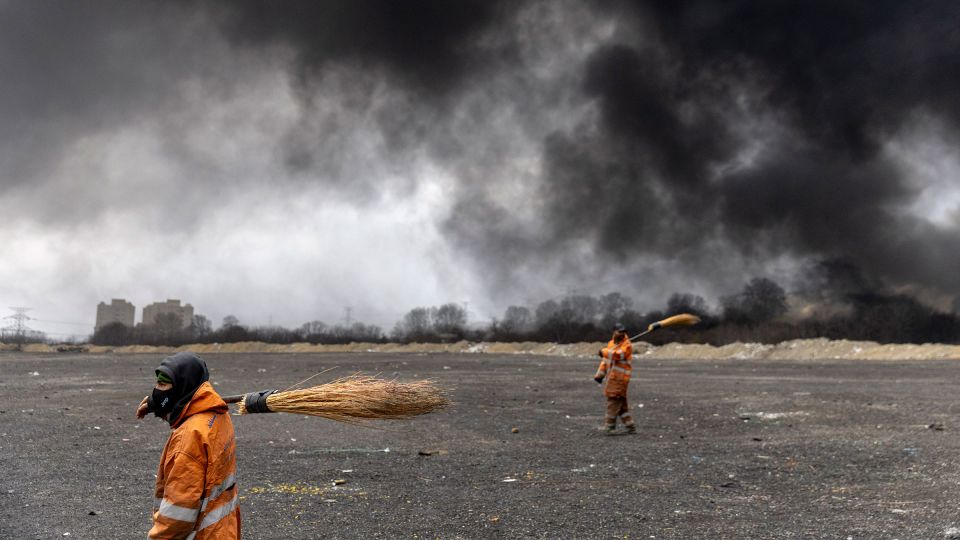
It’s certainly possible that the war gets wrapped up rather quickly, and Iran’s ability to choke off the global oil supply via the Strait of Hormuz is significantly diminished. But right now, that looks like it will be a pretty arduous process that could cost even more American lives, in addition to economic hardship.
And it’s asking a lot of Americans to plead for that kind of patience right now, for a few reasons.
Even if people are willing to put up with short-term pain, they generally only do so when they believe the long-term gain is both a) real and b) greater than the short-term pain.
As I wrote Thursday, the war with Iran doesn’t seem to clear either of those bars. In fact, Americans on balance see the war as making the United States less safe.
For whatever reason, the Trump administration never bothered to spend much time publicly building a case for this war beforehand, which now makes it doubly hard to ask people to sacrifice for the war.
And Americans don’t think the “short-term pain” will be particularly short-lived, either; a Reuters-Ipsos poll this week showed 67% of Americans said they expected gas prices to get worse over the next year. (Just 11% expect them to get better.)
Americans have been asked to sacrifice a lot recently
The second reason is that Americans have been asked to endure such short-term pain a lot in recent years. First came the pandemic. Then the tariffs. Now comes the biggest new US war in two decades.
And it’s not like people are being asked to sacrifice in an economy they already feel great about; Americans have been down on the economy for a long time.
At some point, it stands to reason, Americans would probably prefer that the economy get better first — and then the government tries things that require such sacrifice.
“The American people are not known for taking short-term pain when it comes to economics, particularly oil and gas,” Trump ally Steve Bannon said recently on his show.
The tariffs bargain hasn’t exactly paid off
And the final reason Americans might be skeptical is that they’ve been sold these promises before, a year ago. And the administration hasn’t exactly delivered on the long-term side of the ledger.
Commerce Secretary Howard Lutnick in March predicted things would be great by the end of 2025.
He told Bloomberg TV that “starting the third quarter, you start to feel some Donald Trump, and in the fourth quarter you will feel the power of Donald Trump’s economy.” He told Fox Business Network, “In the fourth quarter of 2025, this economy is going to be humming.”
That same month, White House adviser Peter Navarro was asked how long until the tariffs brought a manufacturing base back to US shores. He said, “It’s going to be very quick.”
Those manufacturing jobs still haven’t materialized. In fact, the United States has lost manufacturing jobs in 13 of the past 14 months.
The year 2025 was also the weakest year for overall job growth outside of a recession in more than 20 years. And the jobs numbers have gotten worse from there.
As for Lutnick’s “humming” claim? The gross domestic product slowed significantly in the fourth quarter, dropping to an annualized growth rate of just 0.7% (that number was revised down Friday from an initial estimate of 1.4%.). Some of that was due to the government shutdown, but it was also weighed down by the stagnant job market.
And while the inflation rate is down somewhat from when Trump took over, it remains stubborn at 2.4%.
If there’s a discernible tariff benefit, it’s the revenue they’ve generated for the government. And the administration has celebrated that. But given tariffs are taxes that are overwhelmingly paid by Americans, it’s basically celebrating how much it raised taxes.
Or, perhaps more to the point, it’s celebrating how much it illegally taxed them.
Trump’s global tariffs were also recently struck down by the Supreme Court, after all. He can try to recreate some of them with other authorities, but those authorities provide him with less leverage to accomplish the long-term gains he set out to do, including restoring manufacturing jobs and striking trade deals. In other words, the gambit could be faltering.
And the sum total of it right now seems to be mostly that the government illegally charged people more than $160 billion, without the long-term deliverables that were promised.
So when the government comes knocking again, asking for people to put up with some short-term pain, it’s a big ask.
This story has been updated with additional developments.
For more DAMAKORONKOWAnews and newsletters create an account atDAMAKORONKOWA



Post a Comment for "Trump keeps asking Americans to sacrifice — for things they don’t want"