
Nature lovers unite to save trees and sod fields in SF park: 'This is the last stand'
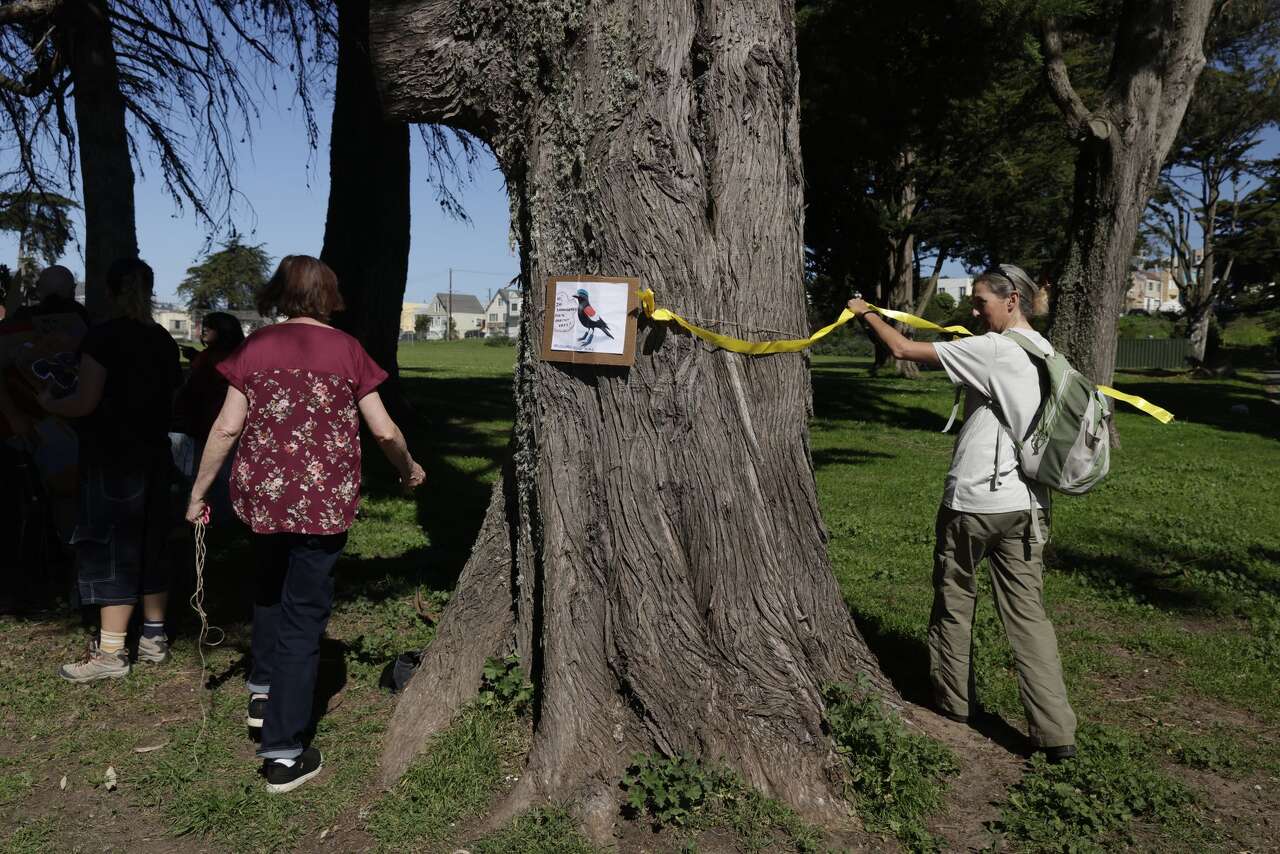
Susan Mullaney gave up her Sunday morning to drive from her home in San Francisco's Sunset District to the Crocker-Amazon District, just to tie a yellow ribbon 'round an old pine tree. A neighborhood dog walker stopped to ask what she was doing, and after the ensuing conversation the neighbor suddenly knew about the city plan to remove mature trees and sod fields in favor of synthetic turf at Crocker Amazon Playground.
"I'm outraged that the city would inflict plastic on this park," said Mullaney, ignoring the fact that a soccer match was being played on artificial turf on the other side of the promenade where she was standing. "The yellow ribbon makes it pop and brings attention. People in this neighborhood don't know that the city plans to cut down 128 trees."
Mullaney is a member of Keep Crocker Real, which is literally a grassroots organization formed to protest the plan to rip out the grass and install 20 acres of synthetic turf to create five new diamonds. The trees lining the pedestrian promenade that bisects the complex will have to be removed to create infrastructure and drainage.
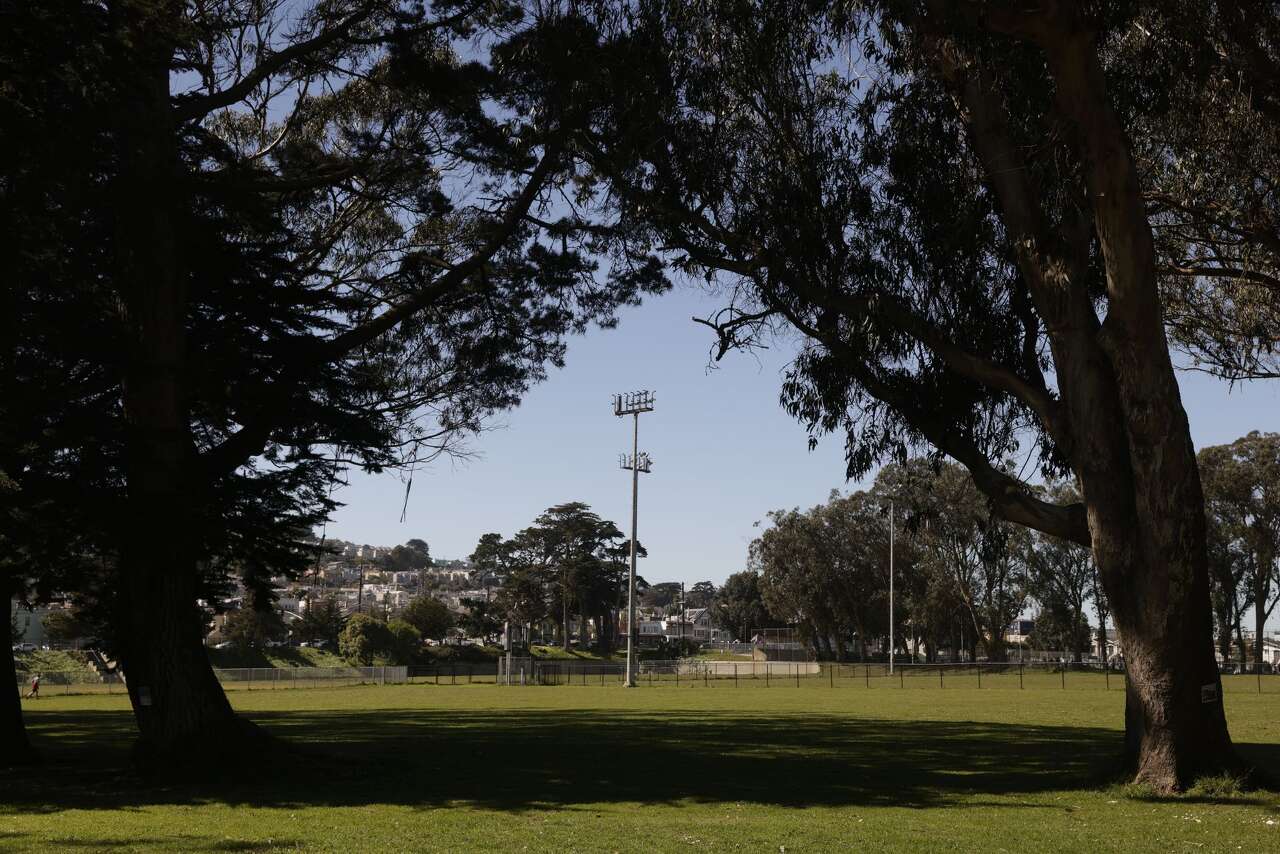
The San Francisco Recreation and Park Department, which is partnering with the San Francisco Giants Community Fund on the $45 million renovation, has promised to replant every tree that has to be removed, but that doesn't appease the opposition. Neither does the assurance that the new turf will be made of cork and sand infill, not the recycled rubber product that is in dispute, due to the hazards of microplastics.
Whatever surface is used, unless it is natural grass, it will be of no use to the birds and insects that live in the grass field soon to be torn up or in the surrounding trees soon to be sawed down.
"You hear the birds chirping? That all goes away," said Bob Hall, an organizer of Keep Crocker Green. "Birds can't survive on 20 acres of plastic. They are dependent on the bugs that live in the grass."
The renovation of Crocker Amazon is tentatively scheduled to begin in 2027 and be completed in 2028. The partnership surfaced last summer when the Giants Community Fund announced that it would pay for half of the project, in an attempt to do its part for the paucity of usable public baseball diamonds in the city.
There is a "critical need for more high quality baseball and softball fields in the city," said Shana Daum, a spokesperson for the Giants, when the project was announced. "Using state-of-the-art artificial turf gives our kids and families thousands of hours of additional playtime each year."
Rec and Park would pay for its half through a 2020 bond issue. The Recreation and Park Commission has not yet scheduled a vote on the project because it is still in the state-mandated environmental review process. If the Rec and Park Commission approves it, the partnership between Rec and Park and the Giants will then go before the Board of Supervisors for approval.
In advance of that, the commission, at its February meeting, adopted a stringent governing policy as to which parks will be approved for application of synthetic turf and what product will be used. Twelve parks in the city already have synthetic turf, adding up to 35 fields. But studies have shown the city to still be short 35 soccer fields and 30 baseball diamonds, based on an independent study commissioned by Rec and Park.
"This project gives young people in our city consistent, safe spaces to grow and thrive," said Sarah Madland, interim general manager for Rec and Park. "What that really means is more kids getting on the field - more practices that don't get canceled, more games played instead of rained out, and more time learning teamwork, building confidence, and just being outside with their friends."
There isn't much dispute that synthetic turf is more durable than grass, but that isn't the whole story, especially at Crocker Amazon, which is on mostly flat land just between the Excelsior District and the Cow Palace on the Daly City border. The park is composed mostly of soccer and baseball fields managed by Rec and Park on land owned by the Public Utilities Commission. Its 42 acres include Hummingbird Farm and butts up against hilly 317-acre McLaren Park, the second-largest city park.
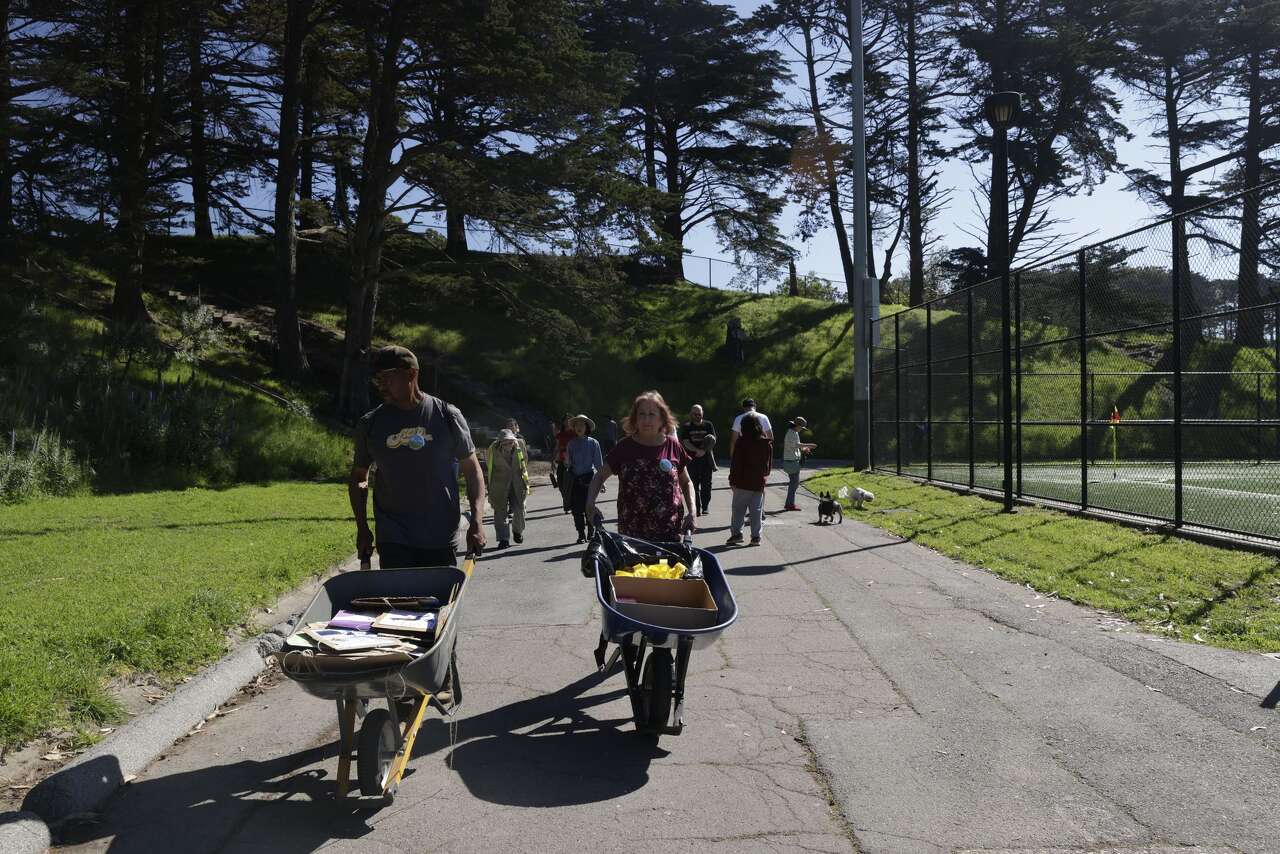
"The thing about grass is you can have both human activity and wildlife," said Hall, a parks volunteer who was walking from the Moscow Street parking lot up through the paved promenade. "This gives you the feel of the big open meadows in Golden Gate Park. There's nothing like it on this side of town."
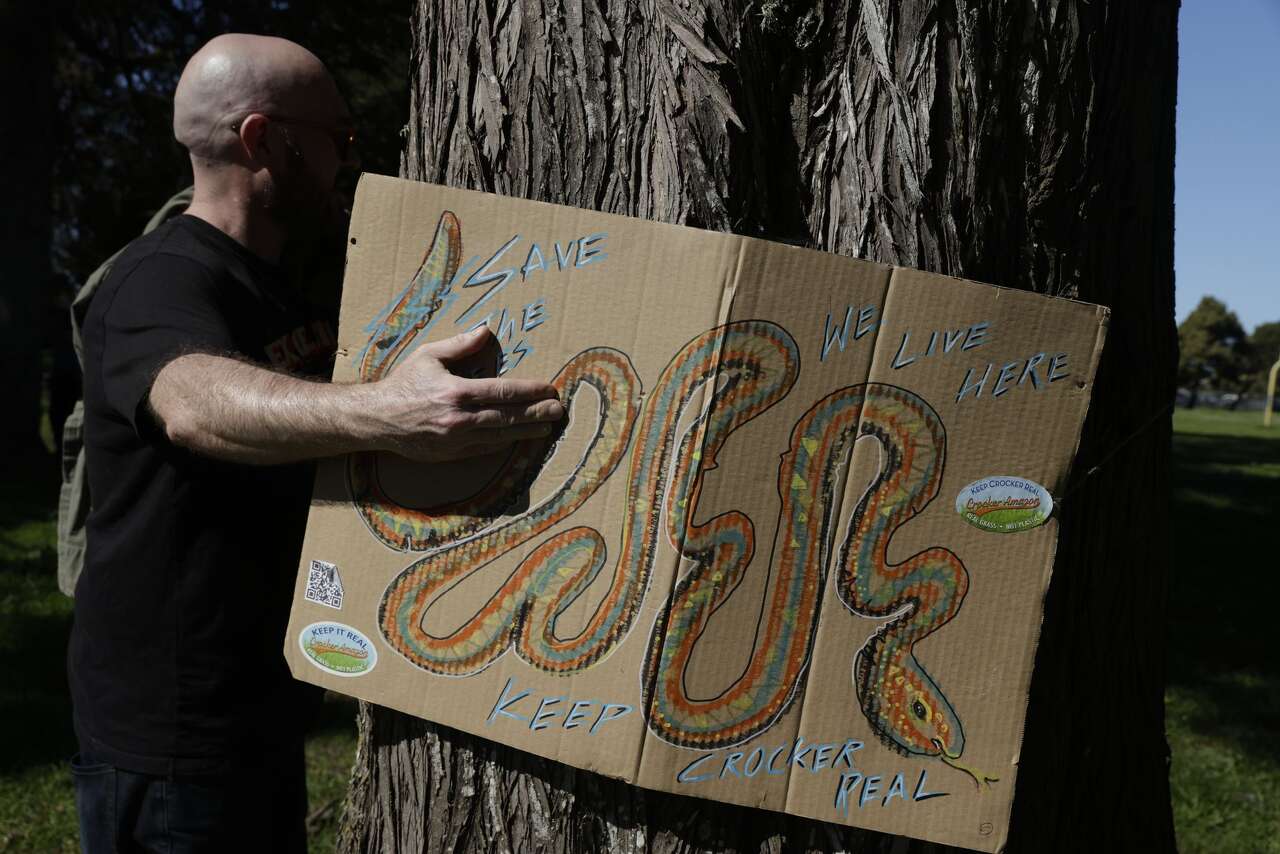
To raise awareness of the plan, Hall and a dozen cohorts in Keep Crocker Real have been meeting on Sunday mornings at Hummingbird Farm, where they load up several wheelbarrows with cardboard signs and haul them over to the grove of trees in danger.
"San Francisco is known as the greenest city in the country, and this plan erodes that," said Tracy Swedlow, who lives in the Crocker Amazon neighborhood and walks her dog in the park daily. "This is cutting off use for people like me. I will have no interest in coming to this park."
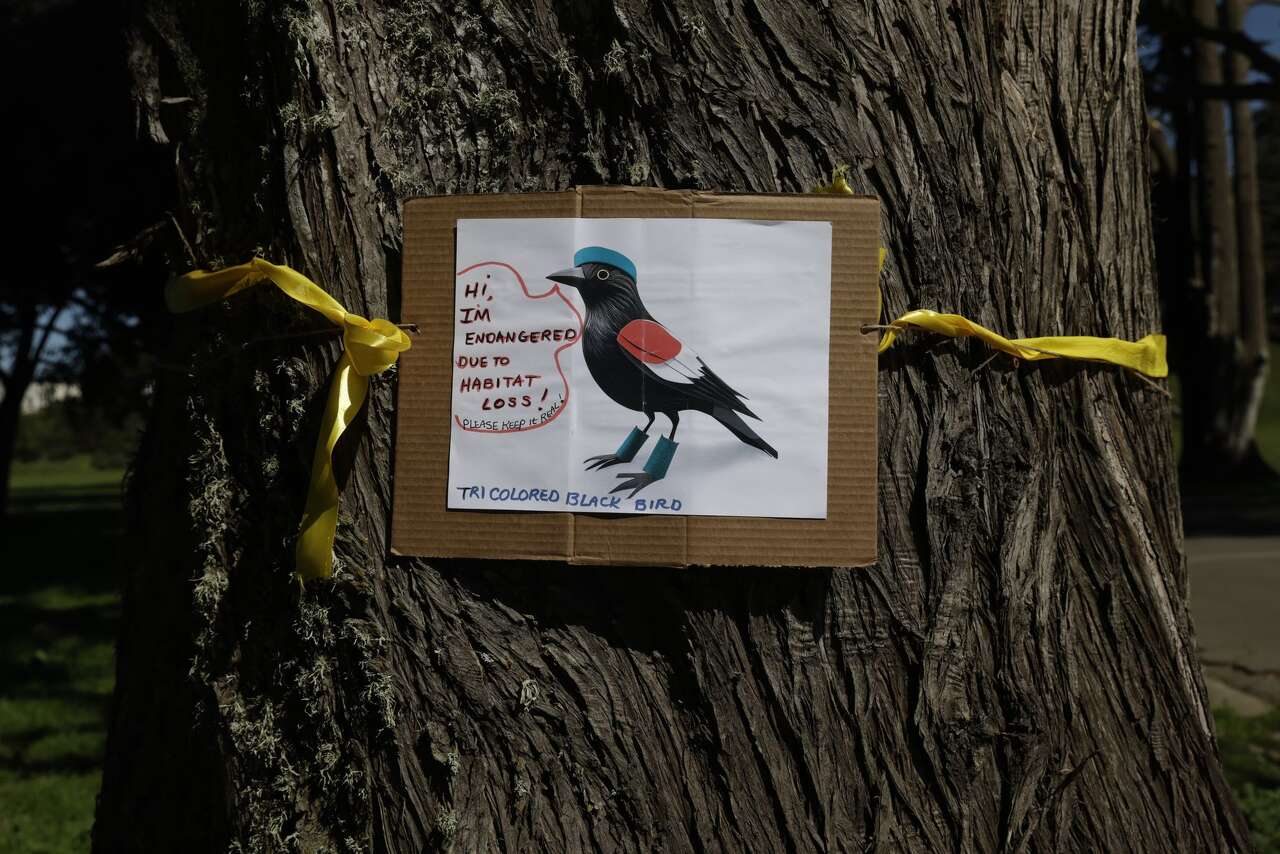
As the activists tied a ribbon with a cardboard sign around each tree, it got the attention of Gregory Gregory, who was walking with his sister, Aspen, and his basset hound, Tony.
"We're upset. We're going to do something. We're going to write a letter," Gregory said. "This is bulls-."
The trees to be removed were to wear their ribbons and cardboard signs all Sunday and overnight. Hall and a few other protest organizers planned to remove them all Monday morning before 9 a.m. This way the morning dog walkers would see them but the park gardeners wouldn't have to deal with their removal.
"You'll never get a chance to save 20 acres again in the city of San Francisco," he said. "This is the last stand."



Post a Comment for "Nature lovers unite to save trees and sod fields in SF park: 'This is the last stand'"