
Central Coast takes center stage at gubernatorial candidate forum in Monterey
MONTEREY — The Central Coast was at the center of California politics Thursday as six Democratic candidates for governor traveled to Monterey to make their case before a room full of engaged voters looking to find someone to throw their support behind.
Among the group of statewide hopefuls that made the trip were former U.S. Secretary of Health and Human Services Xavier Becerra, San Jose Mayor Matt Mahan, former presidential candidate Tom Steyer, California Superintendent of Public Instruction Tony Thurmond, former Los Angeles Mayor Antonio Villaraigosa and former California State Controller Betty Yee.
High-recognition candidates Rep. Eric Swalwell and former Rep. Katie Porter could not attend due to scheduling conflicts.
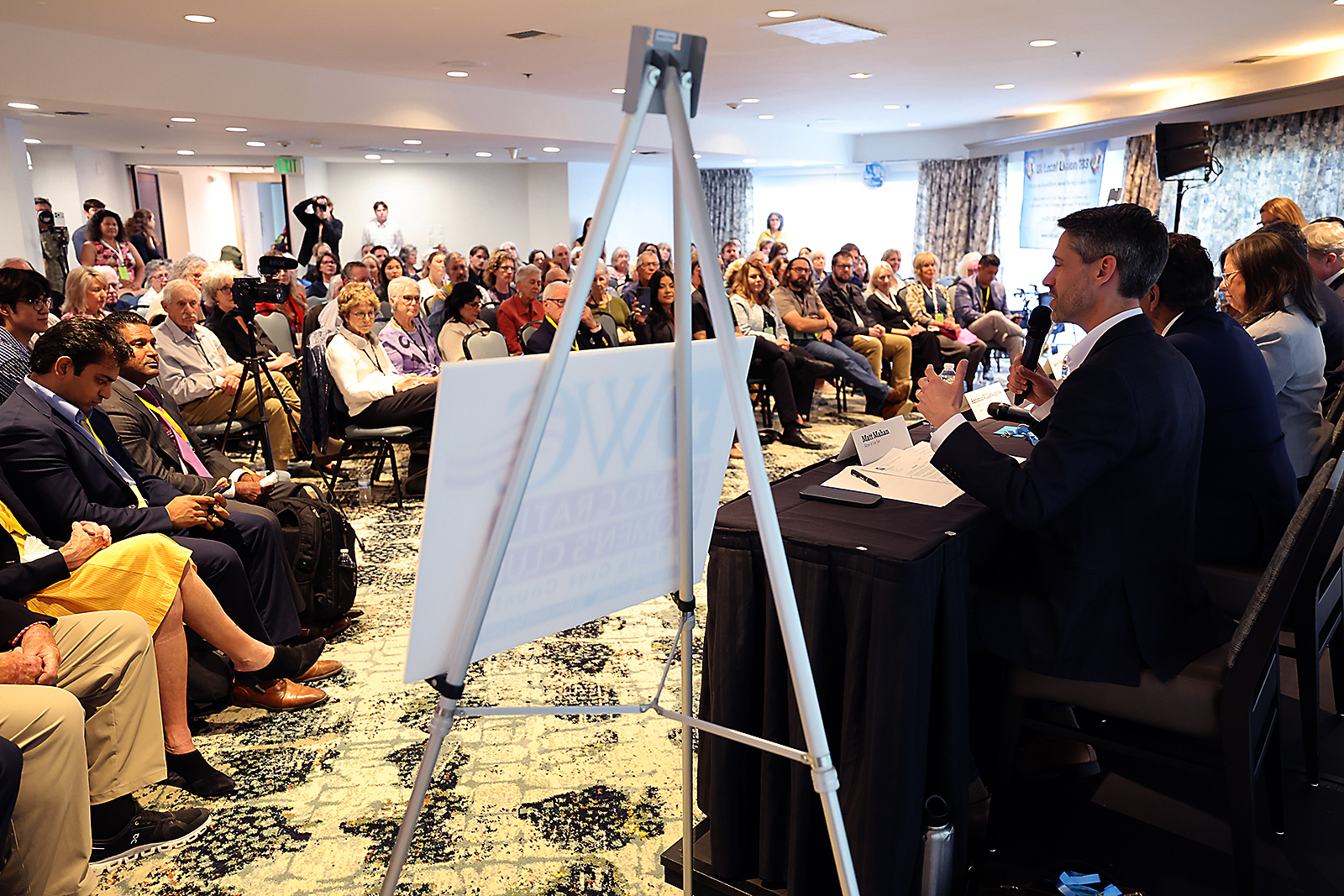
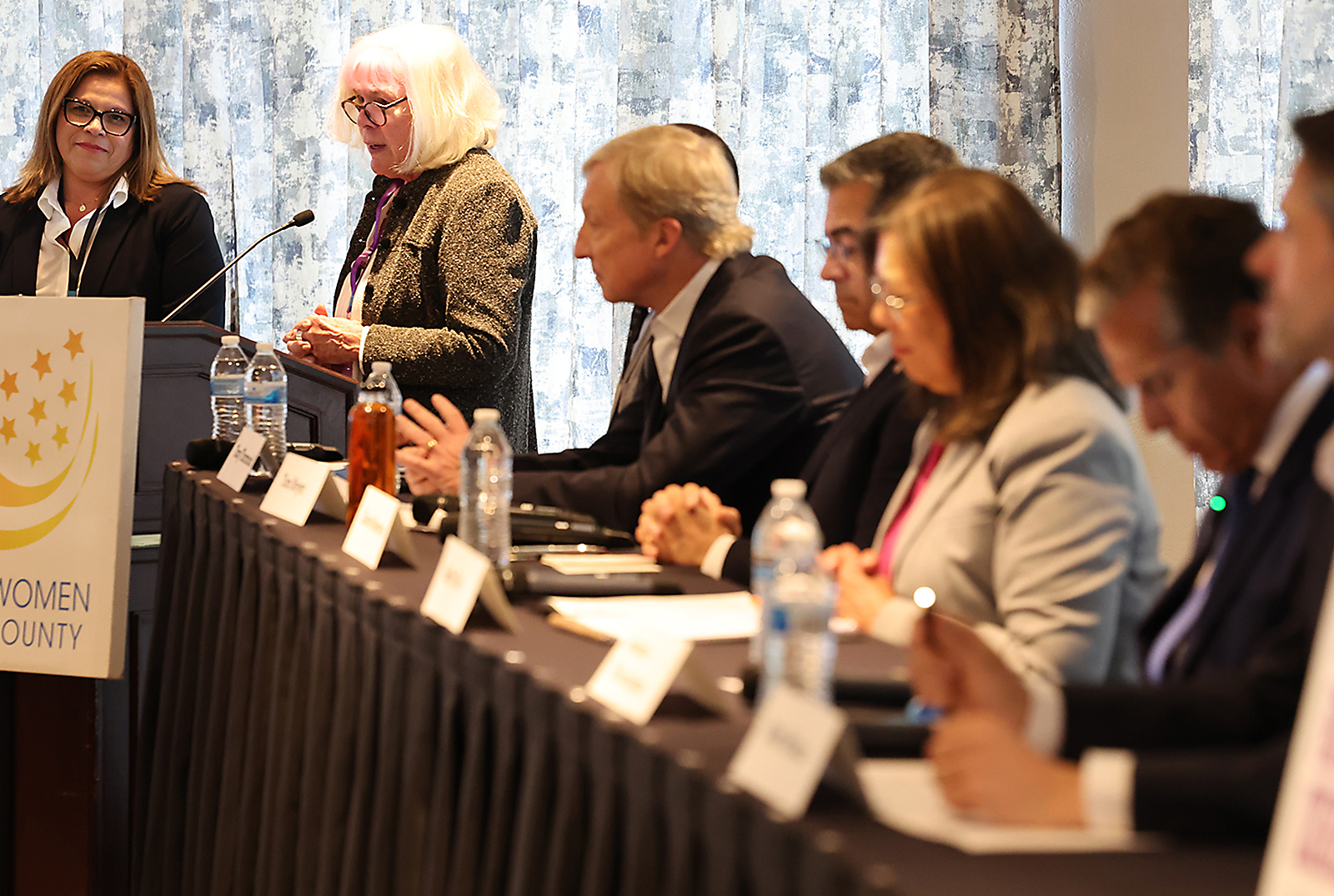
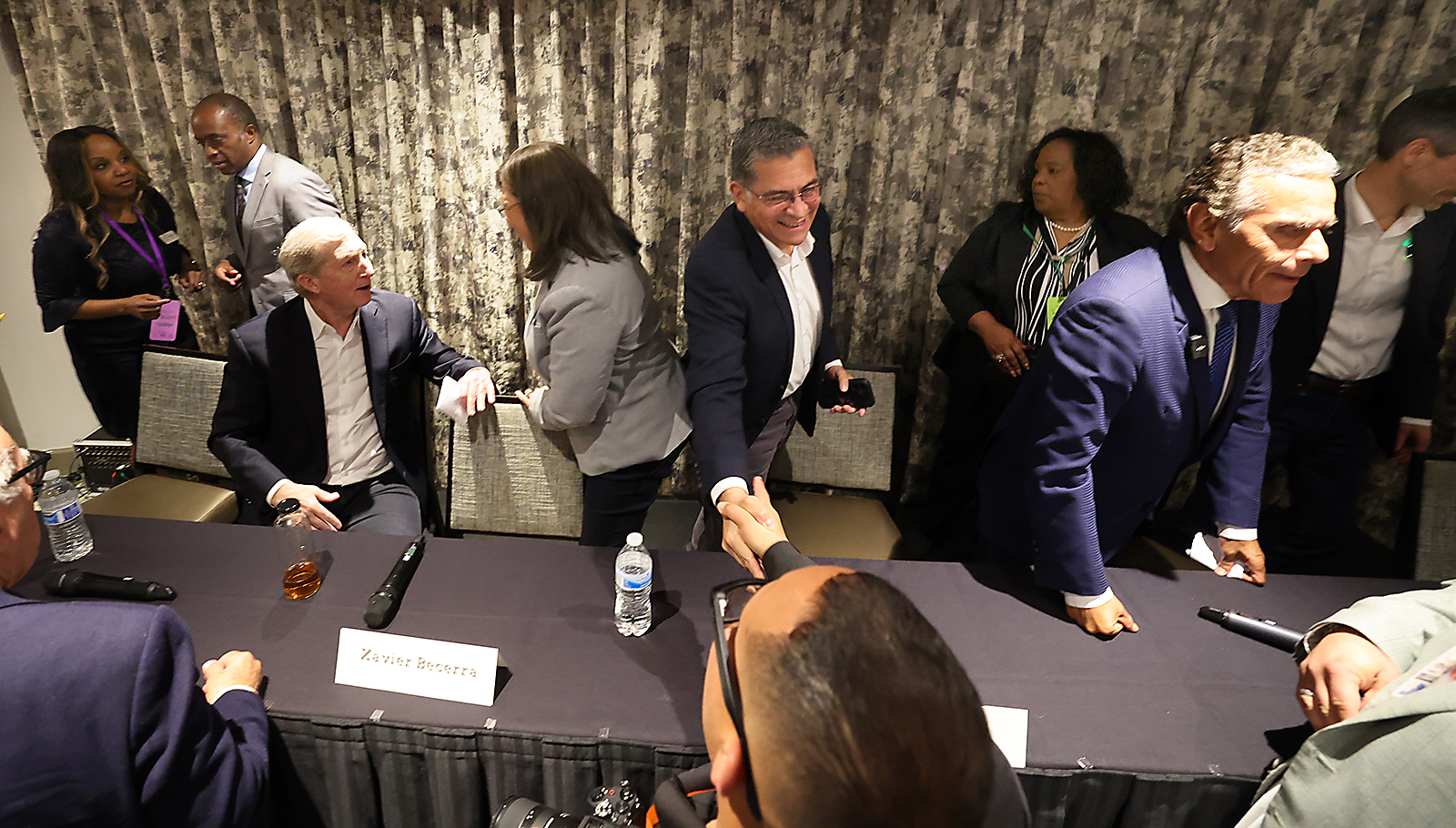
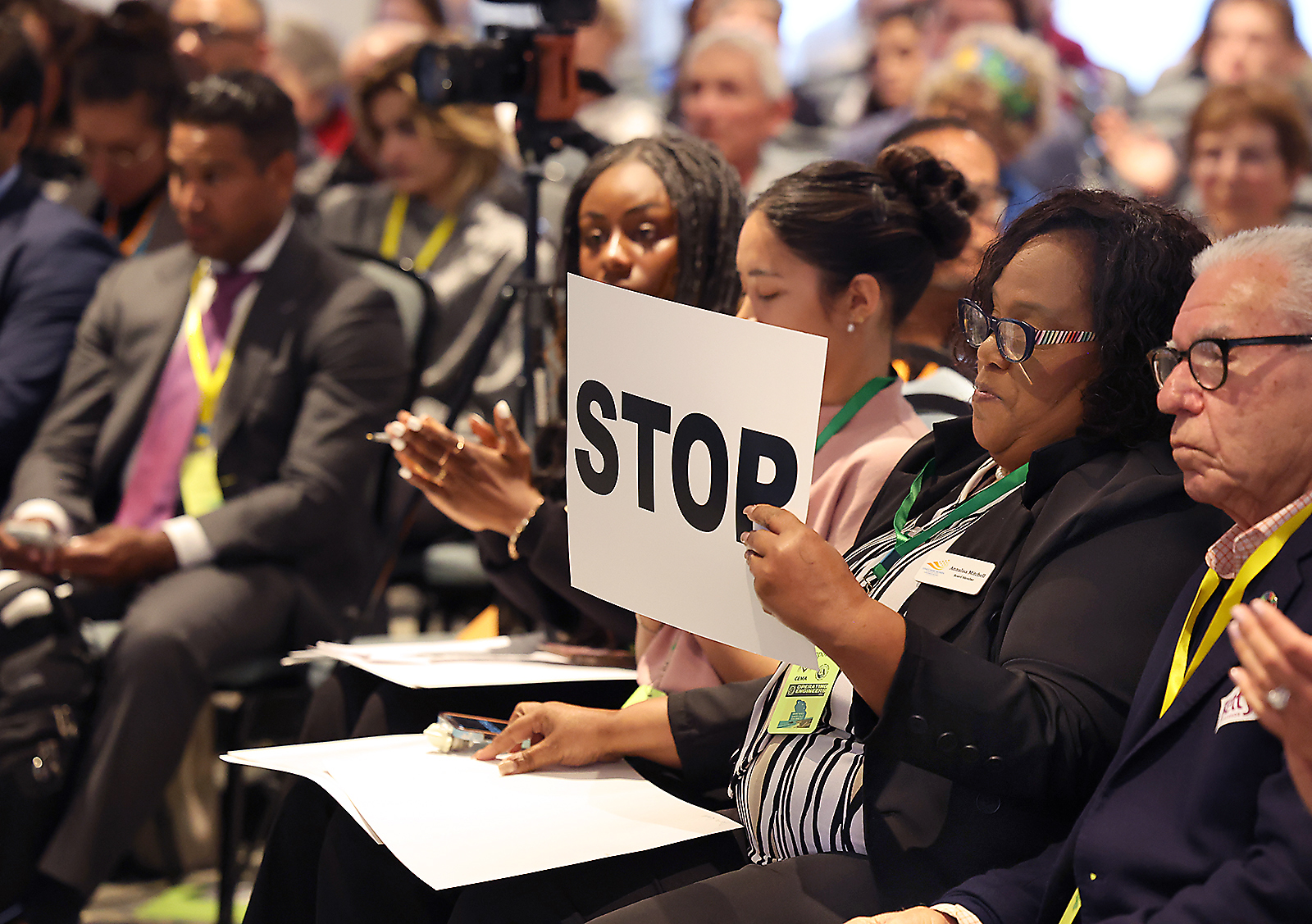
All arrived at the invitation of Democratic Women of Monterey County, Democratic Women’s Club of Santa Cruz County and the San Benito Democratic Central Committee, which came together to host the forum inside the ballroom of the Hilton Garden Inn that attracted an audience of more than 200 people.
Erica Padilla-Chavez, co-chair of Women in Leadership for Diverse Representation and CEO of Second Harvest Food Bank Santa Cruz County, moderated the two-hour discussion that provided each candidate an opportunity to respond to questions about economic opportunity, housing affordability, climate action, public safety, education and health care access within two-minute response windows that were strictly enforced.
First impressions
Several candidates openly recognized that there were a lot of fundamental agreements among the bunch about the issues discussed Thursday. But, some dividing lines about how to actually address the problems the state faces in the years ahead did emerge, most notably around health care and budget challenges.
Steyer, who rose to prominence during the 2020 presidential election cycle, laid out a vision that seeks to close corporate tax loopholes, confront utility companies over rising prices, bolster environmental justice, protect residents from the impacts of artificial intelligence technologies and overhaul housing permit and zoning policies. And, he added, his status as a billionaire allows him the financial freedom to do all this without worrying about donor interests.
“I believe we’re going to have a huge fight between the oligarchs who want to control our state and working people who have been screwed for 45 years,” said Steyer, who has the highest polling numbers among the group that attended Thursday’s event.
The aspirants with the closest ties to the Central Coast were Thurmond, who was born in Monterey and moved to the East Coast at 6 years old after his mother died following a bout with cancer, and Mahan, who was raised by working-class parents in Watsonville and commuted to Bellarmine College Preparatory in San Jose before attending college at Harvard University.
Mahan placed blame for much of the state’s woes at the feet of state lawmakers, who he said established the highest tax system in the country and have dramatically increased spending in recent years with little to show for it. Should he win the race, he pledged to temporarily suspend California’s gas taxes, which he said are highest in the nation, in order to provide relief to the working class. But he indicated he was opposed to the 5% tax on billionaires that has been proposed and is in the signature gathering phase.
“We need to demand Sacramento does better before we ask anyone to pay more,” said Mahan. “We need smarter policies, we need to stop funding failure and demand better from our state government before we turn to you and ask to raise taxes yet again.”
Thurmond, who has previously served on the Richmond City Council and in the California State Assembly, said his campaign priorities include a pledge to build 2 million housing units during his governorship, creation of a down payment homebuyer assistance program, establishment of a single-payer health care system and updated school funding formulas that emphasize overall enrollment as opposed to daily attendance.
“I’ll provide you all with a tax credit to have more money to pay for gas and the high cost of living and we’ll do it by taxing billionaires and making them pay their fair share,” said Thurmond, who appeared to be the only candidate that voiced his support for the billionaire tax measure.
Villaraigosa billed himself as practical problem solver who will rely on his extensive experience balancing large budgets as both a mayor and former speaker of the state Assembly. He also believes the state needs to scale up its housing production by cutting red tape and leaning into renewable energy sources. Similar to Mahan, he took a moment during his introduction to voice skepticism about the utility of the billionaire tax because he believes it will cause negative economic consequences by driving wealthy people out of state.
“The challenges facing us are great,” said Villaraigosa. “We need someone that is big enough, experienced enough to take on those challenges.”
Yee also has a unique connection to Santa Cruz County. She said she lived in the Seabright neighborhood in the late 1980s when she was a public health commissioner at the county and has worked with former Rep. Sam Farr and Santa Cruz Mayor Fred Keeley.
Farr attended the forum, as did many current elected leaders from Santa Cruz County, including Supervisors Felipe Hernandez and Kim De Serpa, and Santa Cruz Councilmembers Shebreh Kalantari-Johnson and Renee Golder.
Yee emphasized the need for innovative strategies to overcome the state’s housing problems and tied it to the need for greater economic mobility. She said she was open to reforming Proposition 13, which county officials have said for years cuts to the core of its financial issues, and touted her financial management experience as something that sets her apart from her opponents.
“I’m running for governor because I’m the only one on this stage who has actually been a state budget director,” said Yee. “I look forward to applying my deep fiscal and financial experience to really make California add up for all of us again.”
Becerra was quick to highlight his ability to go “toe to toe” with President Donald Trump, particularly as California’s attorney general during Trump’s first term when his office handed the administration multiple defeats in court for policies related to health care and immigration. He said his focus will be on expediting housing projects that are shovel-ready, expanding support for county health centers and enacting policies that ensure the wealthy pay their fair share.
“The governor’s office is not a place for on-the-job-training or inflated promises,” said Becerra. “You need someone with experience who knows how to battle, who knows how to fight, but more importantly, knows how to win.”
Health care and immigration
The differences between the candidates were on clearest display during health care discussions. Thurmond, Steyer, Yee and Becerra all said they backed a single-payer system, likely referring to a scenario where one entity collects funds and pays for care for the entire population. Thurmond and Steyer again pointed to taxing ultra wealthy earners, while Yee urged greater efficiency and Becerra said he’d capitalize on his experience as head of the federal health care apparatus.
Mahan and Villaraigosa were aligned in their beliefs that such a system is impractical within a sector that has skyrocketing costs. Instead, they argued the government should lean into skilled workforce training, clinic expansion and competition among insurance providers.
“The way to control costs in health care (is) to have more competition,” said Mahan. “It’s not as simple as just taxing the billionaires or single-payer health care.”
Thurmond and Steyer both had strong words for U.S. Immigration and Customs Enforcement and its agents whose actions in Minnesota earlier this year sparked multiple rounds of public protests in Santa Cruz County.
Thurmond voiced support for abolishing the agency while Steyer called it a “criminal organization” that should be abolished and prosecuted. Becerra also promised to use his skills as a prosecutor to fight the agency in court.
Mahan and Villaraigosa both called ICE actions and tactics such as masking unacceptable. Mahan said he supported efforts on mask bans and ICE-free zones at the city of San Jose, but believes that a healthy, vibrant community is the best resistance to federal overreach. Villaraigosa pledged to sign emergency executive orders on his first day in office that outline accountability measures for the federal immigration agency.
But the task of each candidate to stand out from their opponents is difficult not only because they agree on many issues, but also because of the sheer volume of potential names on the ballot. This has caused statewide party leaders to worry that if too many stay in the race for the June election, it could split tickets to such a degree that two Republicans could head to the November runoff and guarantee a Democratic loss. The California Democratic Party Chair issued an open letter early this month that urged those without “a viable path” to drop out before April 15.
Yee was the only candidate to respond to this directly during the forum.
“To me, that’s the most undemocratic thing I’ve ever heard,” she said. “The idea that we are going to have our party set the field for this race when the voters should have a choice is really, I think, unconscionable.”



Post a Comment for "Central Coast takes center stage at gubernatorial candidate forum in Monterey"